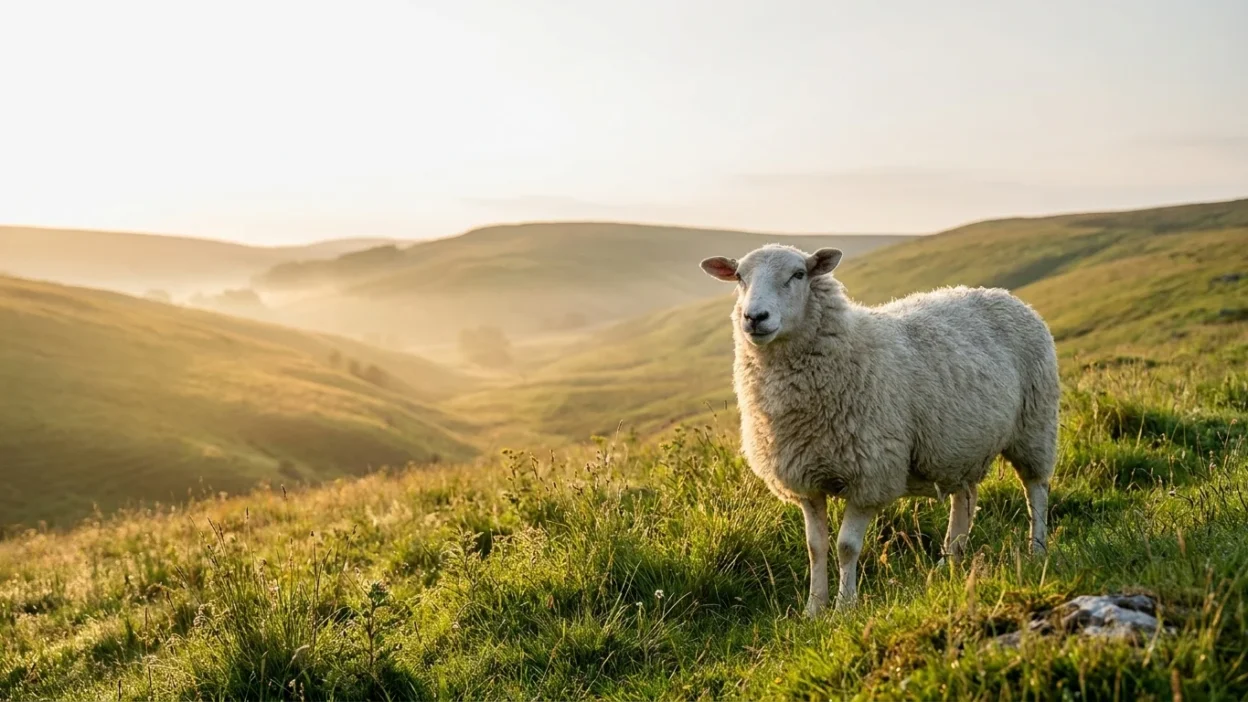
Sheep symbolism is commonly associated with gentleness, peace, innocence, humility, trust, community, guidance, and spiritual devotion. Because sheep live in groups and have been closely connected with human communities for thousands of years, they carry meanings that reach far beyond their quiet appearance.
The sheep can represent both vulnerability and strength. Its gentle nature may symbolize compassion and peace, while its ability to live within a flock highlights the importance of belonging, cooperation, and mutual care.
Across religion, mythology, culture, dreams, and modern life, sheep symbolism often invites us to consider how we balance individual identity with community, trust with independence, and gentleness with resilience.
Sheep Symbolism Meaning (Clear Definition)
Sheep symbolism refers to the symbolic meanings people associate with the sheep’s behavior, gentle nature, social instincts, and long relationship with human civilization.
In simple terms, sheep symbolism represents peace, innocence, humility, trust, community, guidance, sacrifice, and spiritual devotion.
The sheep’s flocking behavior is particularly important. Sheep naturally live in groups, making them a powerful symbol of belonging and cooperation.
Their gentle appearance also contributes to associations with kindness, vulnerability, patience, and peacefulness.
Key Sheep Symbolism Meanings
| Symbolic Meaning | What It Represents |
|---|---|
| Peace | Calmness, harmony, and freedom from unnecessary conflict |
| Innocence | Purity, sincerity, and a gentle nature |
| Community | Belonging, cooperation, and mutual support |
| Guidance | Trusting wise leadership and finding direction |
| Humility | Quiet strength without the need for dominance |
| Sacrifice | Giving something meaningful for a greater purpose |
| Protection | Care, guardianship, and responsibility toward others |
| Faith | Trust, devotion, and spiritual confidence |
At its heart, sheep symbolism teaches that gentleness does not mean weakness, and belonging does not require losing your individuality.
What Does Sheep Symbolism Represent?
Sheep symbolism represents a wide range of qualities connected with peace, relationships, trust, and spiritual awareness.
Peace and Gentleness
The sheep’s calm appearance makes it one of the most recognizable symbols of gentleness.
It can represent a peaceful approach to life, encouraging compassion rather than unnecessary aggression.
Sheep symbolism may be especially meaningful when you are dealing with conflict. It can remind you that strength does not always have to be loud.
Sometimes, choosing patience and kindness is the stronger response.
Innocence and Purity
White sheep are often associated with innocence and purity, particularly in religious and artistic traditions.
This symbolism can represent a sincere heart, honest intentions, or a desire to return to a simpler way of living.
However, innocence does not necessarily mean naivety. Symbolically, it can mean maintaining kindness and integrity without allowing difficult experiences to completely harden you.
Community and Belonging
Perhaps one of the strongest meanings of sheep symbolism is community.
A flock demonstrates how individuals can move, rest, and respond to danger together. This creates a natural metaphor for families, friendships, communities, and social groups.
The sheep reminds us that people need connection. Independence is valuable, but meaningful relationships can provide support during difficult periods.
Trust and Guidance
Sheep have historically been cared for by shepherds, creating a powerful symbolic relationship between the follower and the guide.
As a result, sheep symbolism can represent trust in wise guidance.
It may encourage you to recognize when someone has earned your trust and when accepting guidance can help you move safely through uncertainty.
Humility
Unlike animals traditionally associated with dominance, sheep symbolize a quieter form of strength.
They can represent humility, modesty, and the ability to contribute without demanding attention.
This makes sheep symbolism meaningful for people who believe that character is often demonstrated through everyday actions rather than dramatic displays.
Sacrifice and Service
Sheep have played important roles in agricultural and religious practices, including sacrificial traditions.
Because of this, sheep symbolism can represent selflessness, service, devotion, and giving something valuable for the benefit of others.
The deeper message is not that self-sacrifice should always be expected. Instead, it can encourage thoughtful generosity and service when they align with your values.
Spiritual Meaning of Sheep Symbolism
The spiritual meaning of sheep symbolism is strongly connected with faith, guidance, humility, peace, devotion, protection, and belonging.
The sheep’s relationship with the shepherd has become one of the most powerful spiritual metaphors associated with the animal.
The shepherd provides direction and protection, while the sheep follows and remains within the flock. Symbolically, this can represent trust in a higher power or in a wise spiritual path.
The sheep can also symbolize spiritual humility. Its quiet nature suggests that meaningful spiritual growth does not always require recognition or dramatic experiences.
Sometimes growth happens through patience, compassion, service, and trust.
Sheep as a Icon
For people who use animal symbolism in spiritual practices, the sheep may represent:
- Peace during turbulent times
- Trust in spiritual guidance
- Community and belonging
- Gentleness and compassion
- Humility and patience
- Faith and devotion
- Protection and care
- Service to others
A sheep icon can be particularly meaningful when you need reassurance, emotional calm, or a stronger sense of connection with people who genuinely support you.
Biblical / Religious Meaning of Sheep Symbolism
Sheep have one of the most significant symbolic roles of any animal in the Bible.
In the Old Testament, sheep were an important part of everyday agricultural life and were also used in religious sacrifices. This practical and religious importance helped create a rich symbolic language around sheep and shepherds.
One of the best-known biblical passages is Psalm 23, which begins with the image of God as a shepherd caring for His sheep. The shepherd represents guidance, protection, provision, and reassurance.
In the New Testament, Jesus is described as the Good Shepherd, while His followers are often represented through sheep imagery.
The symbolism emphasizes care, guidance, spiritual belonging, and the relationship between a shepherd and those under his protection.
Sheep also appear in biblical teachings about judgment and salvation. The separation of sheep and goats in the Gospel of Matthew uses the animals symbolically to distinguish different responses and spiritual conditions.
Because of these traditions, biblical sheep symbolism can represent:
- Faith
- Spiritual guidance
- Protection
- Obedience
- Humility
- Sacrifice
- Salvation
- Community and belonging
In Christianity, the lamb also carries profound symbolism in connection with Jesus as the Lamb of God, adding themes of sacrifice, redemption, innocence, and spiritual salvation.
Outside Christianity, sheep and lambs have also held religious importance in Jewish tradition and other ancient cultures, particularly through agricultural and sacrificial practices.
Sheep Symbolism in History and Culture
Sheep have been domesticated for thousands of years and have played a major role in human civilization.
They have provided wool, milk, meat, hides, and other resources, making them essential to many agricultural communities.
Because of this long relationship, sheep symbolism developed around sustenance, prosperity, family life, labor, community, and survival.
In pastoral societies, the health of a flock could directly affect a family’s livelihood. Caring for sheep therefore required patience, attention, responsibility, and protection.
This helped strengthen the symbolic connection between sheep and shepherds.
The shepherd became a cultural image of leadership because a good shepherd had to guide the flock, locate food and water, protect animals from danger, and respond to changing conditions.
This idea later expanded into religious and political symbolism, where leaders were sometimes described as shepherds responsible for the well-being of their communities.
Cultural Themes Associated With Sheep
Sheep have commonly been connected with:
- Peace and gentleness
- Fertility and abundance
- Community and family
- Faith and devotion
- Agricultural prosperity
- Guidance and leadership
- Sacrifice and service
- Humility and innocence
Although these themes appear frequently, their exact meaning varies across cultures and historical periods.
Sheep Symbolism in Literature and Art
Sheep have been featured prominently in religious paintings, sculptures, poetry, folklore, children’s stories, pastoral art, and modern literature.
In religious art, sheep often appear beside shepherds to symbolize spiritual guidance and protection.
The image of a lamb can communicate innocence and vulnerability, while a flock can symbolize community and belonging.
In literature, sheep can serve as symbols of conformity or unquestioning behavior. The phrase “following the flock” reflects the idea that individuals sometimes follow a group without considering their own judgment.
This interpretation creates an important contrast with the more positive symbolism of community.
The sheep can therefore represent both healthy belonging and the danger of losing individuality within a group.
Children’s literature frequently portrays sheep as gentle, innocent, humorous, or comforting characters. Their familiar appearance makes them particularly effective symbols for lessons about friendship, kindness, courage, and cooperation.
Artists also use sheep to create peaceful pastoral scenes. A flock moving across a green hillside can represent simplicity, harmony, rural life, and connection with nature.
Dream Meaning of Sheep Symbolism
Dreaming about a sheep may symbolize peace, belonging, innocence, guidance, vulnerability, trust, or the desire for emotional security.
The meaning depends on the sheep’s behavior and your emotional response.
Some common interpretations include:
- Seeing a sheep: You may be seeking peace, stability, or a stronger sense of belonging.
- A flock of sheep: This can symbolize family, friendship, community, or social identity.
- A lost sheep: It may represent feeling isolated, uncertain, or disconnected from people you trust.
- A shepherd with sheep: This can symbolize guidance, protection, mentorship, or spiritual direction.
- A white sheep: It may represent innocence, peace, purity, or renewal.
- A black sheep: This can symbolize individuality, feeling different, or being an outsider within a group.
- A newborn lamb: It may represent new beginnings, vulnerability, innocence, or hope.
- A frightened sheep: This could reflect anxiety, insecurity, or a desire for protection.
- A peaceful flock: It may suggest emotional harmony, safety, and contentment.
Dream interpretation is personal rather than universal. The strongest clue is often how you felt during the dream and what is happening in your life at the time.
Modern Meaning of Sheep Symbolism
In modern life, sheep symbolism continues to have both positive and critical meanings.
On the positive side, sheep can represent peace, kindness, cooperation, community, trust, and emotional gentleness.
The animal can remind us that people do not always need to compete. Cooperation and mutual care can create stronger communities.
However, sheep can also symbolize conformity.
The expression “sheep mentality” is commonly used to describe people who follow a group without questioning its direction. This gives sheep symbolism an important modern lesson about balancing belonging with independent thought.
Being part of a community does not mean surrendering your ability to think critically.
The healthiest interpretation of sheep symbolism combines connection with self-awareness. You can value guidance without becoming dependent on it, and you can belong to a group without losing your own identity.
In a world where people often feel pressured to perform, compete, and constantly prove themselves, the sheep can also offer a quieter message: peace, kindness, and connection are valuable forms of strength.
Frequently Asked Questions About Sheep Symbolism
What is the main meaning of sheep symbolism?
The main meaning of sheep symbolism is peace, gentleness, innocence, community, trust, guidance, humility, and spiritual devotion.
What does a sheep symbolize spiritually?
Spiritually, a sheep can symbolize faith, divine guidance, protection, humility, belonging, devotion, and trust in a higher power.
Is seeing a sheep a good sign?
Symbolically, seeing a sheep can be a positive reminder to seek peace, trust wisely, value supportive relationships, and remain gentle without becoming weak.
What does a sheep mean in a dream?
A sheep in a dream may represent peace, community, innocence, guidance, vulnerability, or feeling connected or disconnected from others. The dream’s context determines the most relevant interpretation.
What does a sheep symbolize in the Bible?
In the Bible, sheep commonly symbolize followers, faith, guidance, protection, humility, sacrifice, and spiritual belonging. The shepherd-and-sheep relationship is one of the Bible’s most important animal metaphors.
Conclusion
Sheep symbolism carries a gentle but powerful message about peace, faith, community, humility, and guidance.
The sheep reminds us that gentleness can be a strength and that meaningful lives are often built through trust, cooperation, compassion, and steady connection with others.
At the same time, its symbolism encourages balance. Belonging should not mean losing yourself, and accepting guidance should not mean abandoning your own judgment.
Sometimes, the wisest path is to walk peacefully with others while still knowing who you are.

Miles Maverick is a content writer and symbolism enthusiast at BibloSign.com, specializing in symbol meanings, cultural interpretations, and historical symbolism, helping readers discover deeper insights behind signs, icons, and symbolic traditions.