
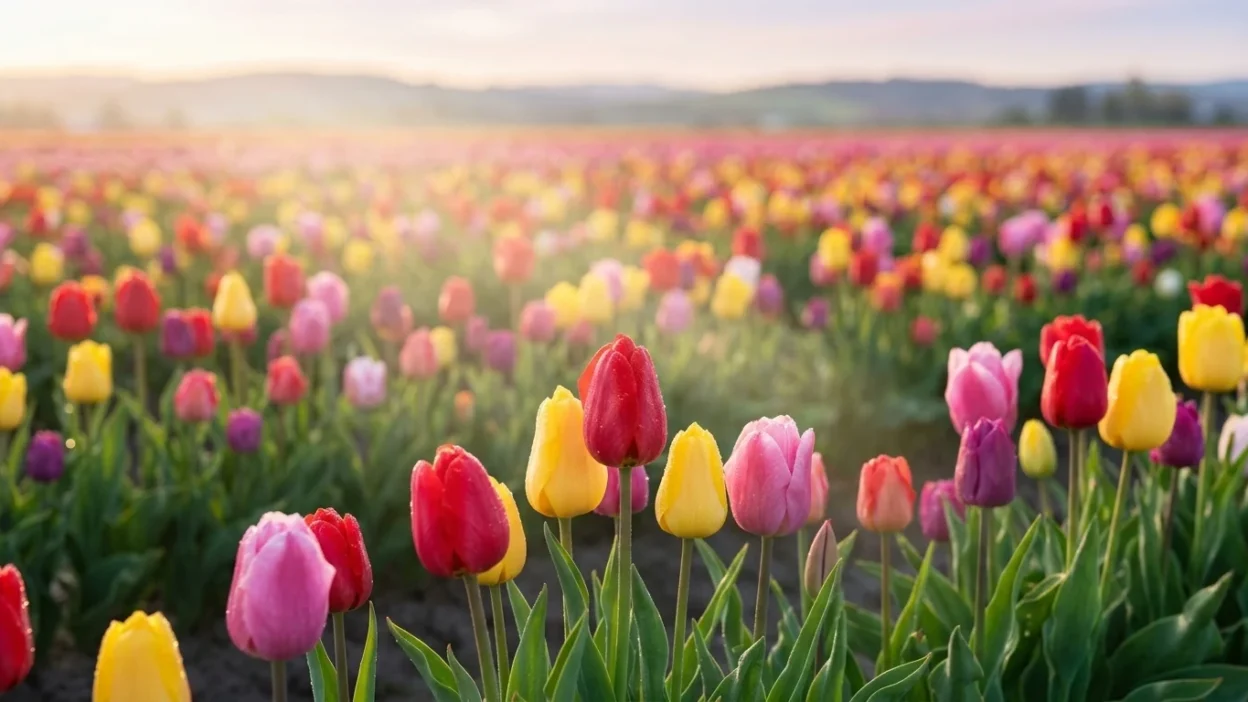
Few flowers capture the arrival of spring quite like the tulip. With its elegant, cup-shaped petals and vibrant colors, this flower has captivated hearts for centuries. But tulip symbolism goes far beyond its visual beauty — it represents love, rebirth, and deep emotional meaning that has shaped art, history, and even entire economies.
If you’ve ever wondered why tulips hold such a special place in gardens, love stories, and cultural traditions, this guide will walk you through everything this iconic flower truly symbolizes.
Tulip Meaning (Clear Definition)
At its core, the tulip symbolizes perfect love, elegance, and new beginnings. Its smooth petals and graceful shape have made it a timeless symbol of romance and renewal.
Here’s a quick overview of tulip symbolism by color:
| Tulip Color | Symbolic Meaning |
|---|---|
| Red | Deep, true love and passion |
| Yellow | Cheerfulness and friendship |
| White | Forgiveness and purity |
| Purple | Royalty and admiration |
| Pink | Affection and good wishes |
| Variegated | Beautiful eyes, admiration |
This range of meanings makes tulips one of the most versatile flowers when it comes to expressing emotion.
What Does the Tulip Represent?
Tulip flower meaning touches on several powerful themes:
- Love and romance – especially red tulips, often seen as a symbol of true love
- Rebirth and renewal – tied closely to their spring blooming season
- Elegance and grace – reflected in their smooth, structured petals
- Prosperity and abundance – historically linked to wealth and status
- Forgiveness – particularly associated with white tulips
- Charitable and selfless love – a meaning that has evolved through royal and cultural traditions
This blend of romantic and spiritual symbolism is part of what makes tulips so universally loved.
Spiritual Meaning of the Tulip
Spiritually, the tulip represents transformation, hope, and the beauty of new beginnings. Because tulips emerge each year after winter, they’re often seen as a symbol of life returning after hardship.
The spiritual meaning of the tulip often reflects:
- Hope after a difficult season of life
- Personal growth and renewal
- Trust in life’s natural cycles
- Emotional healing and openness
Many view the tulip as a gentle reminder that beauty and strength can emerge even after periods of stillness or struggle.
Biblical and Religious Meaning of the Tulip
While tulips are not directly mentioned in scripture, their symbolism aligns closely with broader biblical themes of renewal, grace, and divine beauty.
In religious interpretations, tulips are often associated with:
- God’s promise of renewal each spring
- Purity and grace, especially through white tulips
- The fleeting yet meaningful nature of life, echoing biblical reflections on impermanence and beauty
Because tulips bloom vibrantly after a dormant winter, some see them as a symbol of spiritual awakening and restored faith.
Tulip Symbolism in History and Culture
Tulips have held remarkable cultural and historical significance across the world.
- Ottoman Empire – Tulips were considered a symbol of paradise on earth and were deeply woven into art, poetry, and royal gardens.
- Dutch Golden Age – The famous “Tulip Mania” of the 1600s made tulips a symbol of wealth, status, and even economic speculation.
- Persian culture – Tulips have long symbolized eternal love, often linked to romantic legends and poetry.
- Modern Netherlands – Today, tulips remain a national symbol of pride, beauty, and craftsmanship.
Across these cultures, tulips consistently represent admiration, prosperity, and deep emotional expression.
Tulip Symbolism in Literature and Art
In literature, tulips often symbolize passionate love, especially in Persian and Ottoman poetry, where they are linked to timeless romantic tales. Their vivid color and elegant shape have made them a favorite metaphor for beauty and devotion.
In visual art, tulips are frequently used to represent:
- Romantic love and admiration
- Wealth and refined taste, especially in Dutch still-life paintings
- The fleeting nature of beauty and life
- Springtime renewal and vibrancy
Their consistent presence in classical paintings highlights just how deeply tulips have influenced artistic expression throughout history.
Dream Meaning of the Tulip
Dreaming about tulips is often seen as a positive and uplifting sign. Common interpretations include:
- Blooming tulips – happiness, love, and emotional fulfillment
- Wilting tulips – fading feelings or missed opportunities
- Receiving tulips – recognition, admiration, or new romantic interest
- Planting tulips – personal growth or the start of a new life chapter
- A field of tulips – abundance, joy, and overall life satisfaction
These dream meanings often reflect your emotional state, particularly around love, growth, and new beginnings.
Modern Meaning of the Tulip
In today’s world, tulip symbolism continues to represent love, elegance, and renewal, but its meaning has expanded to reflect personal growth and self-expression. Many now view tulips as a symbol of:
- Fresh starts, whether in relationships, careers, or personal goals
- Confidence and quiet elegance
- Emotional authenticity, especially through color choices
- Celebrating life’s simple yet meaningful moments
This modern interpretation keeps the tulip relevant as both a romantic gesture and a symbol of personal transformation.
Frequently Asked Questions
What does a tulip symbolize in general?
A tulip generally symbolizes love, elegance, and renewal, with specific meanings often varying by color.
What does a red tulip mean?
A red tulip symbolizes deep, true love and passionate romance, making it a popular choice for expressing heartfelt emotions.
What does it mean to dream about tulips?
Dreaming about tulips often reflects happiness, love, or personal growth, with blooming tulips symbolizing positive emotional experiences.
Why were tulips historically linked to wealth?
During the Dutch Golden Age, tulips became so highly valued that they were seen as a symbol of status and prosperity, leading to the historic Tulip Mania.
What does a white tulip symbolize?
A white tulip typically represents purity, forgiveness, and new beginnings, often used to convey respect or reconciliation.
Conclusion
Tulip symbolism beautifully captures the essence of love, renewal, and quiet elegance. Whether representing romantic devotion, personal growth, or the simple joy of spring, tulips remind us that beauty often returns stronger after every season of change.