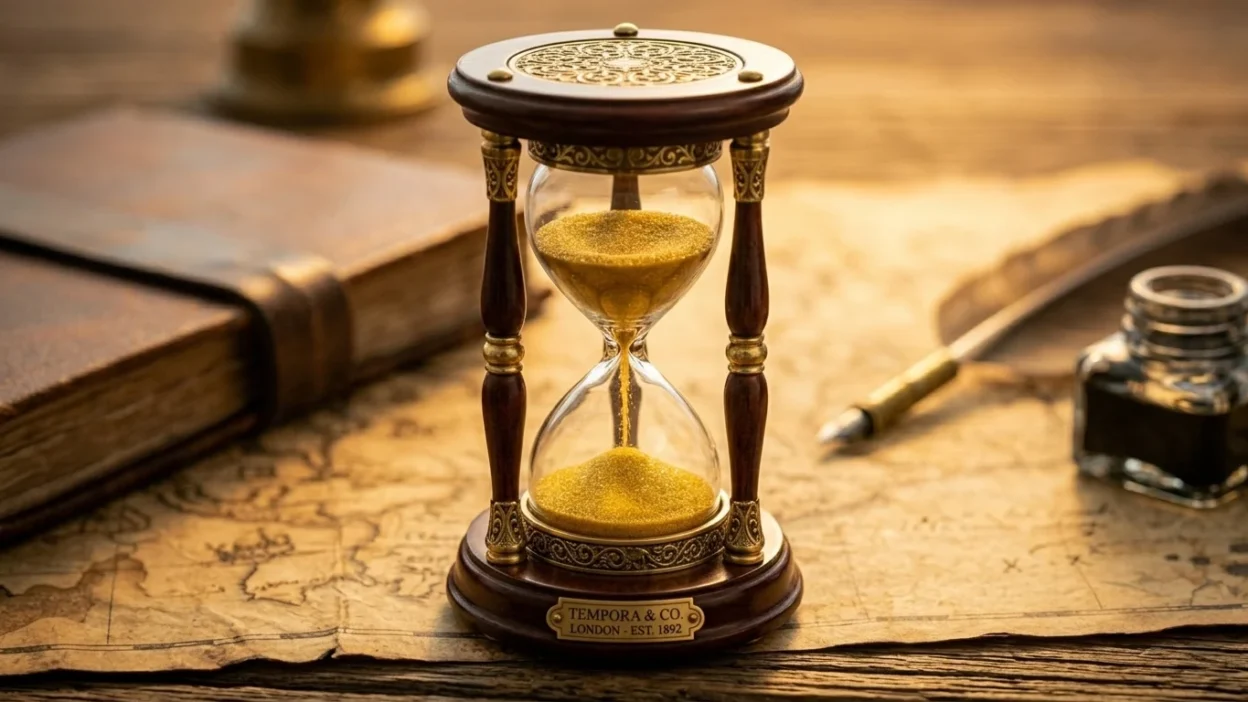
There’s something mesmerizing about watching sand fall gently through an hourglass. Slow, steady, and impossible to rush, it captures the quiet truth that time moves at its own pace, no matter how much we wish to control it. That gentle inevitability is exactly why hourglass symbolism has held such powerful meaning across cultures and centuries, representing time, balance, and life’s natural rhythm. Because it measures moments rather than rushing them, the hourglass remains one of the most poetic symbols of patience and mindful living.
If you’ve ever wondered why the hourglass carries such deep meaning beyond its practical use as a timekeeping tool, this guide will walk you through everything this timeless object truly represents.
Hourglass Meaning (Clear Definition)
At its core, the hourglass symbolizes time, balance, and life’s natural rhythm. Because it measures time through steady, flowing sand, the hourglass represents both the preciousness of each moment and the inevitability of time’s passage.
Here’s a quick overview of its core symbolic meaning:
| Symbolic Element | Meaning |
|---|---|
| Flowing Sand | Time’s passage, mortality |
| Two Equal Chambers | Balance, duality |
| Narrow Center | Transition, life’s turning points |
| Finite Sand | Life’s limited nature |
| Ability to Flip | Renewal, new beginnings |
Because the hourglass measures time in a steady, unhurried way, its symbolism often reflects the idea that life’s most meaningful moments unfold naturally, without needing to be rushed.
What Does the Hourglass Represent?
Overall, hourglass symbolism touches on several meaningful and reflective themes:
- Time’s passage – reflecting the steady, ongoing movement of life
- Mortality – representing the finite and precious nature of time
- Balance – symbolizing equilibrium between two equal chambers
- Transition – linked to life’s turning points and pivotal moments
- Patience – reflecting the value of allowing things to unfold naturally
- Renewal – representing new beginnings each time the hourglass is flipped
Together, these themes highlight why the hourglass continues to be seen as one of the most symbolically meaningful representations of time, patience, and life’s natural balance.
Spiritual Meaning of the Hourglass
Spiritually, the hourglass represents mindfulness, patience, and trust in life’s natural timing. Because it measures moments steadily rather than rushing them, the hourglass is often associated with embracing life’s process without forcing outcomes.
More specifically, the spiritual meaning of the hourglass often includes:
- Trusting that things unfold in their own time
- Practicing patience during periods of waiting or uncertainty
- Recognizing the value of balance between effort and surrender
- Embracing renewal as a natural part of life’s cycles
Many spiritual traditions view the hourglass as a symbol of surrender, believing it represents the wisdom of allowing life to flow naturally rather than resisting its rhythm.
Biblical and Religious Meaning of the Hourglass
While the hourglass isn’t directly referenced in scripture, its symbolism closely aligns with broader religious themes of time, patience, and divine timing.
In biblical and religious interpretations, the hourglass is often associated with:
- Divine timing, symbolizing trust in a greater plan beyond human control
- Mortality, reflecting the finite nature of earthly life
- Patience, representing faith during periods of waiting
- Renewal, linked to spiritual rebirth and new beginnings
Because the hourglass so consistently represents patience and trust in timing, it remains a meaningful symbol within broader spiritual and religious reflection.
Hourglass Symbolism in History and Culture
Throughout history, hourglasses have carried diverse and powerful cultural meaning.
- Medieval Europe – Hourglasses were practical timekeeping tools, symbolizing structure and the measured passage of daily life.
- Renaissance art – Hourglasses frequently appeared in symbolic paintings representing mortality and the fleeting nature of life.
- Maritime navigation – Sailors used hourglasses to measure time at sea, symbolizing precision and reliability.
- Modern symbolic use – Hourglasses continue to represent patience, balance, and mindful time management.
Across these cultures, hourglasses consistently represent time, patience, and a meaningful connection between mortality and renewal.
Hourglass Symbolism in Literature and Art
In literature, hourglasses often symbolize the passage of time, mortality, or a character’s awareness of life’s fleeting nature. Writers frequently use hourglass imagery to build tension, mark significant turning points, or reflect a character’s relationship with time and patience.
Similarly, in visual art, hourglasses hold significant symbolic weight:
- Representing mortality and the fleeting nature of life in classical paintings
- Symbolizing balance and duality in symbolic compositions
- Creating dramatic tension within narrative and reflective artwork
- Reflecting themes of patience and renewal in modern design
Because of their poetic and thought-provoking nature, hourglasses continue to be a favorite artistic tool for exploring time, mortality, and patience.
Dream Meaning of the Hourglass
When an hourglass appears in dreams, it often carries reflective and time-sensitive symbolism. Common interpretations include:
- Watching sand flow steadily – acceptance of time’s natural passage
- An hourglass running out – urgency or fear of missed opportunities
- A cracked or broken hourglass – disruption in routine or loss of control
- Flipping an hourglass – renewal, new beginnings, or a fresh start
- A frozen or stopped hourglass – feeling stuck or resistant to change
Therefore, these dreams often reflect your emotional relationship with time, patience, and life’s transitions.
Modern Meaning of the Hourglass
Today, hourglass symbolism continues to represent patience, balance, and mindful living. In contemporary culture, the hourglass serves as a reminder to:
- Trust that meaningful things take time to unfold
- Balance effort with patience rather than forcing outcomes
- Embrace transitions as natural parts of life’s rhythm
- Value each moment as part of a larger, unfolding journey
Because of its timeless and reflective symbolism, the hourglass remains widely referenced in personal development, mindfulness practices, and cultural storytelling, reinforcing its modern identity as a symbol of patience and balanced living.
Frequently Asked Questions
What does an hourglass symbolize?
An hourglass symbolizes time, balance, and life’s natural rhythm, representing both the preciousness of time and the value of patience.
What is the spiritual meaning of an hourglass?
Spiritually, an hourglass represents trust in divine timing and patience, often symbolizing the wisdom of allowing life to unfold naturally.
What does it mean to dream about an hourglass?
Dreaming about an hourglass often reflects awareness of time, urgency, or a need to embrace patience during a life transition.
Why is the hourglass associated with mortality in art?
Hourglasses have long appeared in symbolic artwork to represent life’s fleeting nature, reminding viewers of time’s steady and finite passage.
Does an hourglass always symbolize something negative?
Not necessarily—while it can represent urgency, the hourglass primarily symbolizes balance, patience, and the natural renewal found in each new beginning.
Conclusion
Ultimately, hourglass symbolism beautifully reflects the value of patience and balance. Representing time’s passage, renewal, and mindful living, this timeless object reminds us that life’s most meaningful moments often unfold exactly when they’re meant to.

Miles Maverick is a content writer and symbolism enthusiast at BibloSign.com, specializing in symbol meanings, cultural interpretations, and historical symbolism, helping readers discover deeper insights behind signs, icons, and symbolic traditions.