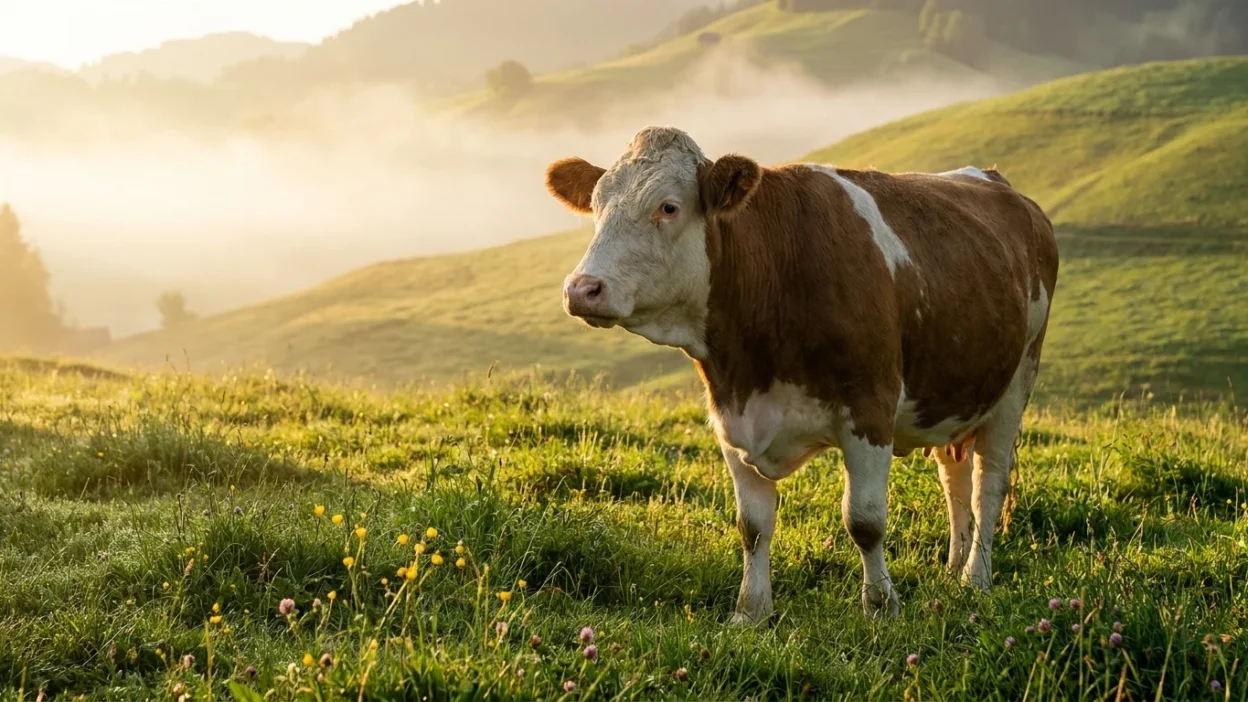
Cow symbolism is closely connected with abundance, nourishment, fertility, patience, motherhood, prosperity, and peaceful strength. Across different cultures and spiritual traditions, the cow has often been viewed as a life-giving animal because it provides nourishment and supports human communities.
Seeing a cow, dreaming about one, or feeling repeatedly drawn to its image can carry different meanings depending on the situation. In general, cow symbolism encourages us to appreciate what sustains us, remain patient during difficult seasons, and recognize the value of generosity and quiet strength.
Cow Symbolism Meaning (Clear Definition)
Cow symbolism represents nourishment, abundance, fertility, patience, motherhood, prosperity, gentleness, and grounded strength. Because cows provide milk and have historically supported agriculture, they are often associated with sustaining life and creating security.
At a deeper level, the cow represents the idea that strength does not always have to be aggressive. Sometimes the greatest power comes from being dependable, patient, peaceful, and generous.
Cow symbolism in one simple definition
Cow symbolism means nourishment, abundance, patience, fertility, protection, and the quiet strength needed to sustain life and community.
The meaning can change according to cultural beliefs and personal experiences, but these themes appear repeatedly throughout history.
What Does Cow Symbolism Represent?
Cow symbolism carries several powerful meanings. Some are connected to the cow’s physical role in agriculture, while others developed through religious and cultural traditions.
| Cow Symbolism | Common Meaning |
|---|---|
| Abundance | Having enough resources and blessings |
| Nourishment | Supporting physical, emotional, or spiritual needs |
| Fertility | Creation, growth, and new beginnings |
| Motherhood | Care, protection, and unconditional giving |
| Patience | Trusting the natural timing of life |
| Prosperity | Material security and productive effort |
| Gentleness | Peaceful strength and compassion |
| Grounding | Stability, routine, and connection with nature |
| Community | Cooperation and shared responsibility |
| Sacredness | Respect for life and creation |
1. Abundance
Cows have traditionally been valuable agricultural animals, providing milk, labor, offspring, and other resources. Because of this, they can symbolize having enough and being able to share what you have.
2. Nourishment
The cow’s connection with milk makes nourishment one of its strongest symbolic meanings. It can represent anything that feeds and supports you, including family, relationships, knowledge, faith, and emotional care.
3. Patience
Cows are generally associated with calm and steady behavior. Their symbolism can therefore remind you not to force every outcome and to allow important things to develop naturally.
4. Fertility and Growth
Because cows reproduce and are connected with agriculture, they have long represented fertility, productivity, and the continuation of life.
5. Motherhood
The image of a cow caring for its calf can symbolize maternal love, protection, sacrifice, and unconditional care.
Spiritual Meaning of Cow Symbolism
The spiritual meaning of cow symbolism centers on nourishment, gratitude, abundance, patience, grounding, compassion, and sacred connection with life.
A cow can appear symbolically when you need to slow down and reconnect with what genuinely sustains you. Instead of chasing constant excitement, its message may encourage you to value stability and appreciate the simple blessings already present in your life.
Cow as a symbol of abundance
Spiritually, abundance is not always about money. It can mean having loving relationships, supportive people, meaningful work, good health, wisdom, or a peaceful home.
Cow symbolism can therefore encourage a mindset of gratitude rather than constant dissatisfaction.
Cow as a symbol of grounding
Cows are closely connected with fields, soil, farming, and natural cycles. This gives them a strong grounding quality.
If life feels chaotic, cow symbolism may suggest returning to basic routines, spending time in nature, caring for your body, and focusing on what truly matters.
Cow as a symbol of patience
A cow does not represent hurried energy. Its symbolic energy is slower, steadier, and more deliberate.
This can be an important reminder when you are frustrated because something is taking longer than expected. Some forms of growth simply cannot be rushed.
Cow as a symbol of generosity
Because cows provide nourishment, they can represent giving without constantly seeking recognition in return.
The symbolism encourages generosity while also reminding us that healthy giving requires balance. You cannot continuously nourish others while completely neglecting yourself.
Biblical / Religious Meaning of Cow Symbolism
Cattle appear frequently throughout the Bible and ancient religious traditions. In biblical contexts, cattle could represent wealth, agricultural prosperity, sacrifice, livelihood, and material blessing, although their meaning depends strongly on the passage.
In the Old Testament, livestock was an important part of economic and social life. Cattle could be signs of prosperity because owning animals represented resources, food, labor, and wealth.
Cows and sacrifice
Cattle were also used in various sacrificial practices in ancient Israel. This gives them an additional religious association with offering, devotion, purification, and relationship with God.
The biblical symbolism of cattle should therefore not be reduced to one simple meaning. In different passages, cattle can be associated with prosperity, sacrifice, livelihood, responsibility, or even judgment.
The golden calf
One of the most famous biblical references involving cattle is the golden calf. In the Book of Exodus, the Israelites create and worship a golden calf, which becomes a powerful symbol of idolatry and misplaced devotion.
This story gives cow-related imagery another important dimension: something valuable or impressive can become spiritually harmful when it replaces one’s devotion to God.
Religious meaning beyond Christianity
The cow holds an especially sacred position in Hindu traditions, where it is widely associated with motherhood, nourishment, generosity, nonviolence, and sacred life. Reverence for cows developed through a long and complex religious and cultural history, and practices vary across communities.
Cow Symbolism in History and Culture
Cows have played a major role in human civilization for thousands of years. They have provided food, agricultural labor, transportation in some societies, leather, and economic security.
For farming communities, cattle were more than animals. They could determine whether a family or village had enough resources to survive.
Ancient agricultural societies
In early agricultural cultures, cattle were closely associated with fertility and the productivity of the land. A healthy herd could represent security, prosperity, and continuity.
This connection helped establish the cow as a symbol of wealth and abundance long before modern ideas of prosperity developed.
Hindu traditions
Cow symbolism is particularly significant in Hindu culture. The cow is often regarded as a maternal and nurturing figure because of the nourishment it provides.
The association with Ahimsa, or nonviolence, also contributes to the cow’s symbolic importance in many Hindu communities.
African and pastoral cultures
In various African pastoral societies, cattle have historically represented wealth, social status, marriage arrangements, livelihood, and community identity.
The specific meanings differ greatly between cultures, but cattle frequently symbolize resources, social connection, and continuity.
European folklore and rural traditions
Across European agricultural traditions, cows became associated with fertility, harvests, household prosperity, and rural life. Seasonal celebrations and folk customs sometimes included cattle as symbols of productive land and community well-being.
Cow Symbolism in Literature and Art
Cows have appeared in paintings, religious imagery, folklore, poetry, children’s stories, advertisements, and rural art.
Artists often use cows to represent simplicity, domestic life, nature, fertility, nourishment, or peaceful rural existence.
In religious art, cows and cattle may carry sacred or sacrificial meanings. In pastoral paintings, they often create a sense of harmony between people, animals, farmland, and nature.
Modern art can also use cows ironically or symbolically. Their familiar appearance makes them useful for exploring themes such as consumer culture, agriculture, environmental responsibility, identity, and humanity’s relationship with animals.
Because the cow is simultaneously ordinary and culturally significant, it can represent both the simplicity of everyday life and deeper questions about what humans value.
Dream Meaning of Cow Symbolism
Dreaming about a cow can symbolize abundance, nourishment, motherhood, patience, prosperity, emotional security, or a need for grounding.
The meaning depends heavily on what the cow is doing and how you feel during the dream.
Dreaming of a healthy cow
A healthy, calm cow may symbolize stability, prosperity, nourishment, or a period of steady growth.
It can suggest that your foundations are becoming stronger.
Dreaming of a cow giving milk
A cow producing milk can represent nourishment, generosity, productivity, and the ability to provide for yourself or others.
It may also point toward emotional or spiritual resources that you have available but have not fully recognized.
Dreaming of a cow with a calf
A cow with a calf often emphasizes motherhood, protection, family, new beginnings, and responsibility.
For some people, it can symbolize the desire to protect something that is still developing.
Dreaming of an angry or aggressive cow
An aggressive cow may represent emotions that have been ignored for too long.
Because cows are normally associated with calmness, an angry cow in a dream can suggest that suppressed frustration, pressure, or resentment needs attention.
Dreaming of a sick or weak cow
A sick cow may symbolize depleted energy, neglected responsibilities, financial concerns, or a lack of emotional nourishment.
Rather than predicting something negative, the dream may simply encourage you to identify what in your life needs more care.
Dreaming of many cows
A large herd can symbolize community, abundance, shared resources, family, or collective strength.
It can also suggest that you are surrounded by opportunities or support that you may not fully appreciate.
Modern Meaning of Cow Symbolism
Today, cow symbolism continues to connect with abundance, sustainability, nourishment, patience, nature, agriculture, and ethical responsibility.
At the same time, modern conversations about farming and animal welfare have added new layers to the symbol.
For some people, cows represent a peaceful connection with nature and traditional agriculture. For others, they raise questions about environmental impact, food systems, animal welfare, and responsible consumption.
Cow symbolism in personal life
On a personal level, cow symbolism can encourage you to ask:
- What currently nourishes me?
- Am I giving too much without receiving enough?
- Where do I need more patience?
- What resources should I appreciate?
- What am I trying to rush?
- How can I create greater stability in my life?
- Who depends on my care and support?
The cow’s message is often less about dramatic transformation and more about steady, meaningful growth.
The shadow side of cow symbolism
Symbolism is not always purely positive. The cow can also represent excessive passivity, stubborn routines, overdependence, or giving too much of yourself.
If you constantly sacrifice your needs for others, the cow’s nurturing symbolism can become a reminder to establish healthier boundaries.
Likewise, if you are refusing to change simply because your routine feels safe, cow symbolism may encourage you to distinguish between genuine stability and stagnation.
Frequently Asked Questions About Cow Symbolism
What is the main meaning of cow symbolism?
The main meanings of cow symbolism are abundance, nourishment, fertility, patience, motherhood, prosperity, and peaceful strength.
What does a cow symbolize spiritually?
Spiritually, a cow can symbolize gratitude, grounding, generosity, nourishment, patience, and respect for life. It may encourage you to appreciate what sustains you.
What does a cow represent in Hinduism?
In many Hindu traditions, the cow is revered as a sacred and maternal figure associated with nourishment, generosity, nonviolence, and life-giving abundance.
What does dreaming about a cow mean?
Dreaming about a cow may represent nourishment, prosperity, family, patience, stability, or emotional security. The cow’s condition and behavior in the dream can change the interpretation.
Is seeing a cow a good spiritual sign?
A cow can be interpreted as a positive spiritual symbol because it is commonly associated with abundance, nourishment, peace, and protection. However, the most meaningful interpretation depends on your personal circumstances and feelings.
Conclusion
Cow symbolism reminds us that meaningful strength can be quiet, patient, and generous. From abundance and motherhood to spirituality and grounding, the cow represents the value of nourishing life rather than constantly rushing toward the next goal.
Its deeper lesson is simple: appreciate what sustains you, give with compassion, grow patiently, and build a life rooted in stability and gratitude.