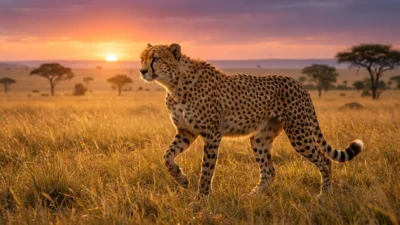

Tiger symbolism is often associated with strength, courage, confidence, independence, protection, and personal power. As one of nature’s most powerful predators, the tiger has inspired admiration, fear, and spiritual curiosity across cultures for centuries.
Seeing a tiger in a dream, artwork, story, or spiritual context can carry different meanings depending on the situation. Sometimes the tiger represents your own inner strength. At other times, it may symbolize a powerful challenge, hidden emotions, leadership, or the need to stand your ground.
Understanding tiger symbolism can therefore offer more than a simple definition. It can provide a way to explore courage, boundaries, confidence, transformation, and the instinctive side of human nature.
Tiger Symbolism Meaning (Clear Definition)
Tiger symbolism refers to the symbolic meanings associated with the tiger, especially strength, courage, independence, protection, confidence, power, and determination.
The tiger is often viewed as a creature that combines physical power with patience. It does not constantly display its strength. Instead, it observes, waits, and acts when the moment is right.
This makes the tiger an especially interesting symbol of controlled power.
Unlike symbols that represent gentle persistence, the tiger often represents the ability to act decisively when necessary. Its presence can suggest that strength does not always require aggression. Sometimes true power comes from confidence, self-control, and knowing when to move.
Key Tiger Symbolism at a Glance
| Tiger Symbol | Common Meaning |
|---|---|
| Strength | Inner and physical power |
| Courage | Facing fear and challenges |
| Independence | Self-reliance and freedom |
| Protection | Defending yourself or others |
| Confidence | Trusting your abilities |
| Patience | Waiting for the right opportunity |
| Leadership | Authority and personal influence |
| Passion | Strong emotions, desire, and motivation |
| Transformation | Growth through difficult experiences |
| Instinct | Listening to intuition and natural impulses |
At its heart, tiger symbolism encourages a balance between power and restraint. A tiger does not need to prove its strength every moment; its presence speaks for itself.
What Does Tiger Symbolism Represent?
Tiger symbolism represents several powerful qualities that can apply to personal growth, relationships, leadership, and difficult life situations.
Strength and Personal Power
The most recognizable tiger meaning is strength.
Because tigers are physically powerful and capable predators, they naturally symbolize the ability to withstand challenges and overcome obstacles.
Symbolically, a tiger may remind you that you possess more strength than you realize.
Courage and Fearlessness
Tigers are frequently connected with courage because they move through their environment with confidence.
In symbolic terms, encountering a tiger can represent a moment when you need to face something rather than avoid it.
Courage does not necessarily mean having no fear. It can mean moving forward despite fear.
Independence and Freedom
Tigers are generally solitary animals, which contributes to their association with independence.
Tiger symbolism may therefore represent self-reliance, individuality, and the freedom to follow your own path.
For someone going through a period of personal change, the tiger can symbolize learning to trust yourself instead of constantly seeking approval from others.
Protection and Boundaries
A tiger can also represent protection.
Its territorial nature makes it a powerful symbol of boundaries. In a personal context, this may suggest protecting your time, energy, values, relationships, or emotional well-being.
The message can be simple: not everyone deserves unlimited access to you.
Patience and Timing
One of the less obvious tiger symbolism meanings is patience.
A tiger does not need to chase every opportunity. It observes and waits.
Symbolically, this can represent knowing when to act and when to remain still. Sometimes the strongest response is not immediate action but careful observation.
Spiritual Meaning of Tiger Symbolism
The spiritual meaning of tiger symbolism often centers on inner strength, courage, instinct, protection, transformation, and personal awakening.
In spiritual traditions and modern symbolic interpretations, the tiger can represent the powerful part of the self that knows how to survive, adapt, and move forward.
Tiger as a Symbol of Inner Strength
Spiritually, a tiger may symbolize strength that comes from within rather than from external status or possessions.
This interpretation can be especially meaningful during periods of uncertainty. The tiger reminds you that confidence can grow when you begin trusting your own abilities.
Tiger as a hero Symbol
In modern spiritual language, the tiger is sometimes described as a hero or power animal.
Tiger symbolism in this context can suggest:
- Trusting your instincts
- Becoming more confident
- Protecting your boundaries
- Facing fear directly
- Embracing independence
- Acting with greater determination
- Reconnecting with your natural instincts
These interpretations are symbolic rather than scientifically established beliefs, and their meaning can vary greatly between individuals and traditions.
Tiger and Personal Transformation
The tiger can also symbolize transformation.
Its solitary nature and powerful presence may represent a period of personal development in which someone becomes more comfortable with who they are.
The symbolic message is not necessarily about becoming more aggressive. It is about becoming more authentic, confident, and self-aware.
Biblical / Religious Meaning of Tiger Symbolism
The Bible does not give the tiger a major symbolic role comparable to animals such as the lion, lamb, dove, serpent, or eagle.
Tigers are not native to the biblical lands described in Scripture, which helps explain their limited presence in biblical symbolism.
However, some qualities commonly associated with tigers—such as strength, courage, power, and protection—overlap with broader biblical themes.
Strength in Biblical Symbolism
The Bible frequently uses powerful animals to communicate ideas about strength, danger, leadership, and divine authority.
While a tiger should not be presented as a specific biblical symbol without textual support, its general qualities can be compared metaphorically with themes of courage and strength found throughout Scripture.
Religious Interpretations Beyond Christianity
In Asian religious and cultural traditions, the tiger has a much stronger symbolic presence.
It has been associated with protection, courage, authority, and the power to overcome harmful forces. In some traditions, tiger imagery appears alongside deities, warriors, guardians, and spiritual figures.
These traditions should be understood within their own historical and cultural contexts rather than combined into one universal religious meaning.
Tiger Symbolism in History and Culture
The Tiger symbolism has a particularly rich history in Asia, where the animal has influenced mythology, art, folklore, military imagery, and royal symbolism.
Tiger Symbolism in China
In Chinese culture, the tiger has traditionally been associated with courage, strength, protection, and authority.
The tiger is also one of the animals represented in the Chinese zodiac. People born in the Year of the Tiger are traditionally associated with qualities such as confidence, bravery, independence, and ambition.
Tiger imagery has also been used as a protective symbol, appearing in traditional art and objects intended to guard against harmful influences.
Tiger Symbolism in Korea
The tiger has an important place in Korean folklore and traditional art.
Korean folk paintings known as minhwa often depict tigers in humorous or symbolic ways. The tiger could represent power and authority while also appearing as a somewhat comic character.
This combination shows how symbolism can be complex. A tiger does not always have to represent fear or dominance; it can also represent humor, social commentary, and the relationship between power and ordinary life.
Tiger Symbolism in India
India has a long cultural relationship with the Bengal tiger.
The tiger appears in mythology, traditional art, royal imagery, and modern national symbolism. Its association with strength and majesty has contributed to its powerful cultural status.
At the same time, the tiger’s modern meaning increasingly includes wildlife conservation and ecological responsibility.
Tigers as Symbols of Royal Power
Historically, powerful rulers and military leaders have used tiger imagery to communicate authority and strength.
The tiger’s physical presence made it an effective symbol of dominance, bravery, and prestige.
This explains why tiger motifs can appear on weapons, clothing, architecture, banners, paintings, and ceremonial objects throughout history.
Tiger Symbolism in Literature and Art
The tiger has fascinated writers and artists because it represents a compelling combination of beauty and danger.
One of the most famous literary treatments of tiger symbolism appears in William Blake’s poem “The Tyger.”
Blake’s tiger is presented as a mysterious and awe-inspiring creature, raising questions about creation, power, beauty, and fear.
The tiger’s stripes, eyes, movement, and physical strength also make it a favorite subject for painters, photographers, sculptors, and contemporary designers.
The Tiger as Beauty and Danger
One reason the tiger is so powerful in art is the contrast between its appearance and its nature.
It can look graceful and beautiful while remaining extremely dangerous.
Artists can therefore use the tiger to explore opposites such as:
- Beauty and danger
- Gentleness and aggression
- Solitude and connection
- Control and instinct
- Fear and fascination
- Power and vulnerability
This makes tiger symbolism especially useful when a story or artwork explores the complexity of human nature.
Dream Meaning of Tiger Symbolism
Dreams about tigers can be interpreted in many ways, but there is no scientifically established universal dictionary that assigns one fixed meaning to every tiger dream.
The best interpretation depends on the tiger’s behavior, your emotions, and what is happening in your waking life.
Dreaming of a Calm Tiger
A calm tiger may symbolize controlled strength, confidence, or emotional balance.
It could represent a powerful part of yourself that you are learning to understand rather than suppress.
Dreaming of a Tiger Chasing You
A tiger chasing you may symbolize fear, pressure, conflict, or a situation you are avoiding.
Instead of automatically treating the dream as negative, consider what the tiger represents to you personally. It may reflect something powerful that you have not yet confronted.
Dreaming of Fighting a Tiger
Fighting a tiger can symbolize a struggle with a powerful challenge, authority figure, strong emotion, or internal conflict.
The outcome of the dream may also matter. Defeating or escaping the tiger could represent confidence, while feeling overwhelmed may reflect current stress.
Dreaming of a White Tiger
White tigers often carry additional symbolic associations because of their unusual appearance.
In dreams, a white tiger might represent rarity, mystery, spiritual curiosity, individuality, or a powerful experience that feels outside ordinary life.
Again, the dreamer’s personal associations are more important than any fixed interpretation.
Modern Meaning of Tiger Symbolism
Today, tiger symbolism extends beyond mythology and spirituality.
The tiger has become a modern symbol of confidence, ambition, leadership, individuality, athletic strength, and resilience.
It appears in sports logos, company branding, fashion, tattoos, films, games, and popular culture.
Tiger Tattoos and Personal Symbolism
Tiger tattoos are often chosen to represent qualities such as:
- Courage
- Strength
- Independence
- Survival
- Protection
- Personal transformation
- Confidence
- Determination
For many people, a tiger tattoo represents overcoming a difficult chapter and becoming stronger through experience.
Tigers and Leadership
The tiger’s confident presence also makes it a popular leadership symbol.
However, effective leadership is not simply about dominance. The more meaningful tiger interpretation is quiet authority—having confidence without needing to constantly demonstrate it.
Tigers and Conservation
Modern tiger symbolism also carries an environmental message.
Wild tigers face serious threats from habitat loss, illegal wildlife trade, and other human pressures. As a result, the tiger increasingly represents the importance of protecting biodiversity and preserving wild spaces.
This gives tiger symbolism a deeper modern dimension: protecting the tiger means protecting ecosystems in which countless other species also live.
Frequently Asked Questions About Tiger Symbolism
What is the main meaning of tiger symbolism?
The main meaning of tiger symbolism is strength, courage, independence, confidence, protection, and personal power.
What does a tiger symbolize spiritually?
Spiritually, a tiger can symbolize inner strength, instinct, courage, protection, independence, and personal transformation, depending on the tradition or belief system.
What does seeing a tiger symbolize?
Seeing a tiger may symbolically represent a need for courage, stronger boundaries, greater confidence, or awareness of your own personal power.
What does a tiger mean in a dream?
A tiger in a dream may reflect strength, fear, conflict, confidence, instinct, or a powerful situation in waking life. The tiger’s behavior and your emotional response are important to the interpretation.
Is a tiger a symbol of good luck?
In some Asian cultural traditions, tiger imagery is associated with protection, courage, strength, and the ability to overcome threats. Whether it represents good luck depends on the specific cultural context.
Conclusion
Tiger symbolism is ultimately about power with purpose.
The tiger can represent courage when life feels uncertain, strength when challenges seem overwhelming, independence when you need to trust yourself, and protection when stronger boundaries are necessary.
Its deepest lesson may be that real strength does not always need to be loud. Sometimes it is the quiet confidence to wait, observe, trust your instincts, and act when the moment is right.

Myla Leah is a passionate writer at BibloSign.com who explores symbol meanings, spiritual symbolism, cultural traditions, and historical interpretations, helping readers uncover the deeper significance behind symbols from around the world.