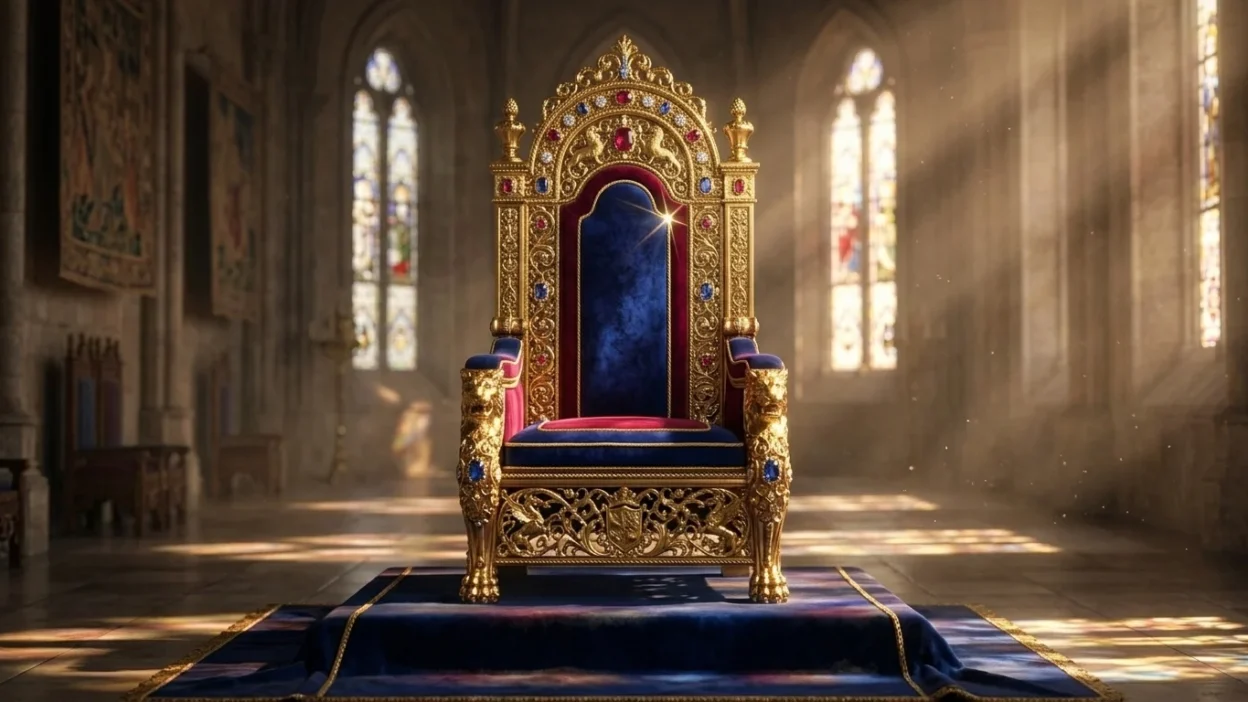
There’s a reason a throne commands attention the moment you see it. Elevated, ornate, and unmistakably significant, it represents far more than just a place to sit. That instant sense of importance is exactly why throne symbolism has held such powerful meaning across cultures and centuries, representing authority, judgment, and rightful position. Because it’s reserved for those entrusted with leadership, the throne remains one of the most enduring symbols of power and responsibility in human history.
If you’ve ever wondered why the throne carries such deep meaning beyond its royal associations, this guide will walk you through everything this iconic seat truly represents.
Throne Meaning (Clear Definition)
At its core, the throne symbolizes authority, judgment, and rightful position. Because it’s traditionally elevated above others, the throne represents both earned leadership and the responsibility of governing with wisdom.
Here’s a quick overview of its core symbolic meaning:
| Symbolic Element | Meaning |
|---|---|
| Elevated Position | Authority, superiority |
| Ornate Design | Honor, distinction |
| Seat of Judgment | Wisdom, decision-making |
| Ceremonial Use | Legitimacy, tradition |
| Fixed Location | Stability, permanence |
Because the throne is positioned above the surrounding space, its symbolism often reflects the idea that true authority carries both privilege and the weighty responsibility of fair judgment.
What Does the Throne Represent?
Overall, throne symbolism touches on several meaningful and commanding themes:
- Authority and leadership – reflecting positions of governance and power
- Judgment – representing wisdom and fair decision-making
- Legitimacy – symbolizing rightful claim to a position or role
- Stability – reflecting permanence and established order
- Honor and distinction – recognizing achievement or rightful status
- Responsibility – reminding the occupant of duty tied to their position
Together, these themes highlight why the throne continues to be seen as one of the most symbolically significant representations of power balanced with accountability.
Spiritual Meaning of the Throne
Spiritually, the throne represents inner sovereignty, self-mastery, and rightful spiritual authority. Because it symbolizes a rightful seat of power, the throne is often associated with claiming one’s own inner strength and wisdom.
More specifically, the spiritual meaning of the throne often includes:
- Recognizing personal authority over one’s own life and choices
- Claiming inner wisdom and self-respect
- Balancing personal power with humility and fairness
- Establishing a firm foundation for spiritual growth
Many spiritual traditions view the throne as a symbol of rightful inner rule, believing it represents the alignment between personal empowerment and wise, balanced decision-making.
Biblical and Religious Meaning of the Throne
In many religious texts, the throne holds deep symbolic significance tied to divine authority, judgment, and heavenly rule.
In biblical and religious interpretations, the throne is often associated with:
- Divine sovereignty, symbolizing God’s ultimate authority and rule
- Judgment, representing righteous decision-making and accountability
- Heavenly glory, often described in visions of divine majesty
- Eternal kingship, reflecting lasting spiritual authority beyond earthly power
Because the throne so consistently represents divine authority and judgment, it remains one of the most spiritually significant symbols across religious traditions.
Throne Symbolism in History and Culture
Throughout history, thrones have carried diverse and powerful cultural meaning.
- Ancient Egypt – Thrones symbolized a pharaoh’s divine right to rule, often elaborately decorated to reflect connection to the gods.
- European monarchies – Thrones became a powerful symbol of royal legitimacy, passed down through generations as a mark of lineage.
- Asian traditions – Ceremonial seats and thrones often represented spiritual authority alongside political power.
- Modern symbolic use – Thrones continue to represent leadership and achievement in various ceremonial and ornamental contexts.
Across these cultures, thrones consistently represent authority, legitimacy, and a meaningful connection between power and responsibility.
Throne Symbolism in Literature and Art
In literature, thrones often symbolize ambition, power struggles, or the burden of leadership within a character’s journey. Writers frequently use throne imagery to explore themes of authority, legacy, and the complexities that come with holding significant influence.
Similarly, in visual art, thrones hold significant symbolic weight:
- Representing authority and legacy in royal portraiture
- Symbolizing judgment and wisdom in ceremonial artwork
- Creating visual emphasis on status within symbolic compositions
- Reflecting themes of power and responsibility in classical and modern art
Because of their commanding visual presence, thrones continue to be a favorite artistic tool for exploring leadership, ambition, and legacy.
Dream Meaning of the Throne
When a throne appears in dreams, it often carries empowering and reflective symbolism. Common interpretations include:
- Sitting on a throne – confidence, recognition, or stepping into a leadership role
- An empty throne – uncertainty about authority or an unfilled opportunity
- Someone else on a throne – comparison regarding power or admiration for another’s position
- A crumbling or damaged throne – loss of confidence or fear of losing status
- Approaching a throne – personal growth toward greater authority or self-respect
Therefore, these dreams often reflect your emotional relationship with confidence, authority, and personal empowerment.
Modern Meaning of the Throne
Today, throne symbolism continues to represent authority, achievement, and rightful position. In contemporary culture, the throne serves as a reminder to:
- Recognize personal authority over one’s own life and decisions
- Embrace responsibility that comes with growth and success
- Lead with fairness and wisdom rather than unchecked power
- Claim confidence in earned accomplishments and position
Because of its timeless and commanding symbolism, the throne remains widely referenced in leadership discussions, personal empowerment, and cultural storytelling, reinforcing its modern identity as a symbol of rightful authority and self-respect.
Frequently Asked Questions
What does a throne symbolize?
A throne symbolizes authority, judgment, and rightful position, representing both earned leadership and the responsibility of fair governance.
What is the spiritual meaning of a throne?
Spiritually, a throne represents inner sovereignty and self-mastery, often symbolizing personal empowerment and wise decision-making.
What does it mean to dream about a throne?
Dreaming about a throne often reflects confidence, recognition, or stepping into a new position of personal authority.
Why is the throne associated with divine authority?
Throughout history, thrones have symbolized a ruler’s connection to divine power, representing God-given authority and spiritual judgment.
Does a throne always symbolize something positive?
Generally yes—while a throne can represent the burden of responsibility, it primarily symbolizes achievement, authority, and rightful leadership.
Conclusion
Ultimately, throne symbolism beautifully reflects the balance between power and responsibility. Representing authority, judgment, and rightful position, this powerful seat reminds us that true leadership comes from embracing both confidence and fair, thoughtful decision-making.

Miles Maverick is a content writer and symbolism enthusiast at BibloSign.com, specializing in symbol meanings, cultural interpretations, and historical symbolism, helping readers discover deeper insights behind signs, icons, and symbolic traditions.