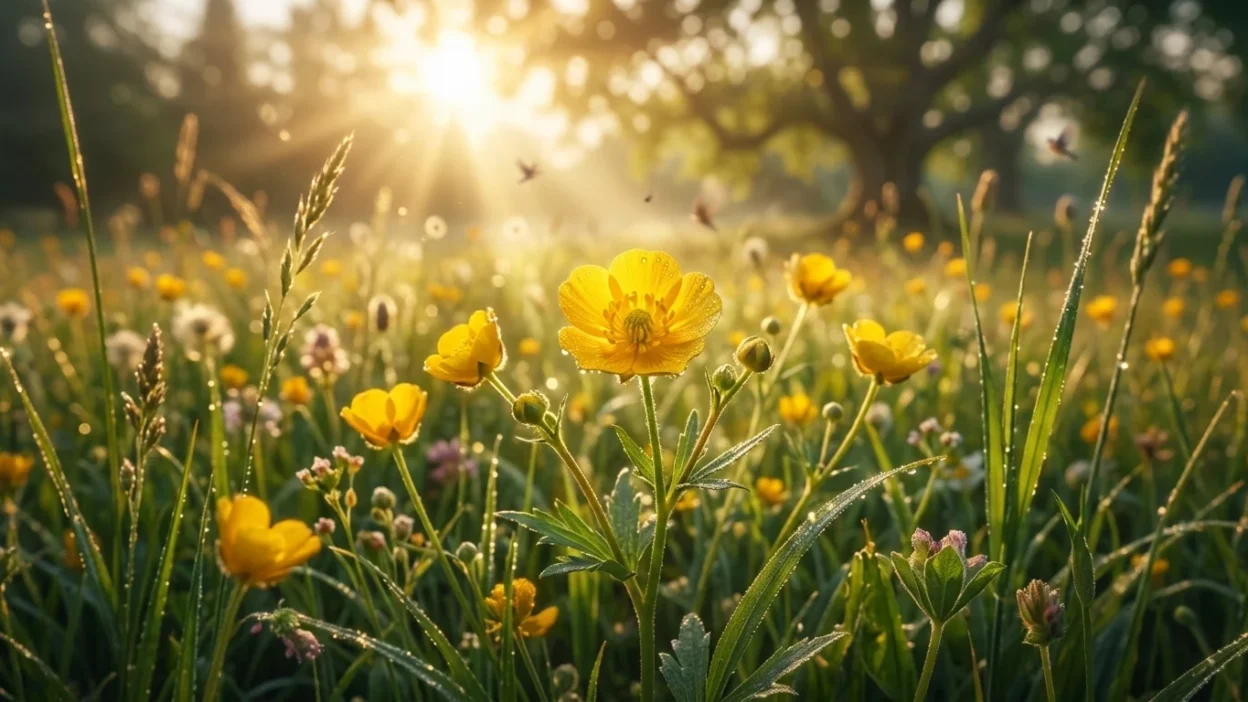
There’s something instantly uplifting about spotting a field of buttercups swaying in the breeze. Their glossy, sunlit petals seem almost too bright to be real. This isn’t just visual charm — buttercup symbolism has captivated people for generations, representing joy, humility, and quiet inner richness. Whether you’ve encountered this flower in a garden, a dream, or an old folk tale, its meaning runs deeper than its cheerful appearance suggests.
In this guide, we’ll explore what buttercups truly symbolize and why this small wildflower continues to hold such meaningful significance today.
Buttercup Meaning (Clear Definition)
In simple terms, the buttercup symbolizes happiness, charm, and modest beauty. Its bright yellow color is closely tied to positivity, warmth, and light-heartedness.
Here’s a quick overview of its core symbolic meaning:
| Symbolic Element | Meaning |
|---|---|
| Yellow Color | Joy, optimism, energy |
| Cup-Shaped Bloom | Abundance, receiving good fortune |
| Wild Growth | Simplicity, resilience |
| Small Size | Humility, understated beauty |
Because buttercups grow freely in meadows and fields without cultivation, they’re often associated with natural, effortless beauty — a reminder that not everything valuable needs to be showy.
What Does the Buttercup Represent?
Buttercup flower meaning generally centers around a few key themes:
- Joy and positivity – reflected through its vibrant yellow hue
- Humility – it grows close to the ground yet still stands out
- Playfulness – tied to childhood games and lighthearted memories
- Hidden abundance – its cup shape symbolizes unseen blessings
- A gentle caution against vanity – in some tales, warning against arrogance
Together, these meanings make the buttercup a symbol of simple joy paired with quiet wisdom.
Spiritual Meaning of the Buttercup
Spiritually, the buttercup is often seen as a symbol of inner light and self-acceptance. Despite growing in ordinary or even harsh conditions, it blooms brightly — a reflection of resilience and quiet confidence.
The spiritual meaning of the buttercup often encourages people to:
- Embrace joy in everyday moments
- Recognize personal worth without needing external validation
- Stay humble while still allowing their light to shine
Many view this flower as a gentle spiritual reminder that true radiance doesn’t require attention-seeking — it simply exists naturally.
Biblical and Religious Meaning of the Buttercup
While the buttercup isn’t as widely referenced in scripture as flowers like the lily or rose, its symbolism aligns closely with common biblical themes of humility and grace.
In many folk-Christian interpretations, the buttercup’s golden color is seen as representing:
- Divine abundance and blessing
- Simplicity within faith
- Beauty found in modest, overlooked places
Because it thrives without cultivation, some interpret the buttercup as a reflection of the idea that grace and beauty can appear in unexpected, humble settings.
Buttercup Symbolism in History and Culture
Across different cultures, the buttercup has carried varying symbolic meanings.
- European folklore often linked buttercups to fairies, believing their golden glow came from captured sunlight.
- Victorian flower language (floriography) associated buttercups with childlike joy, cheerfulness, and occasionally a subtle warning against vanity.
- Rural traditions viewed buttercups as early markers of spring, symbolizing renewal and new beginnings.
Despite these cultural differences, one consistent theme remains — buttercups represent lightness, cheer, and a connection to nature’s simple beauty.
Buttercup Symbolism in Literature and Art
In literature, buttercups often symbolize youth, fleeting beauty, and pastoral simplicity. Writers frequently use fields of buttercups to evoke nostalgia, painting images of carefree summers and childhood wonder.
In visual art, buttercups are commonly used to represent:
- Innocence and youthful charm
- Natural abundance
- The quiet elegance of untouched landscapes
Their humble size compared to more elaborate garden flowers also reinforces the idea that meaningful beauty doesn’t need to be extravagant.
Dream Meaning of the Buttercup
Seeing buttercups in a dream is generally considered a positive symbol. Common dream interpretations include:
- Renewed happiness or optimism
- A reminder to appreciate life’s simple pleasures
- Emotional healing after a difficult period
- Recognition of your own value and worth
If the buttercups in your dream appear vibrant and blooming, it may indicate joy entering your life. Wilted or scattered buttercups, however, might suggest overlooked emotions or unacknowledged efforts.
Modern Meaning of the Buttercup
Today, buttercup symbolism has evolved into a broader message about authenticity and self-assurance. In a world that often prioritizes grand gestures, the buttercup serves as a reminder that:
- Genuine happiness doesn’t require validation
- Small joys hold real value
- Growth and beauty can happen anywhere, even in imperfect conditions
Modern interpretations often frame the buttercup as a symbol of quiet confidence — thriving happily without needing to compete with flashier blooms.
Frequently Asked Questions
What does a buttercup flower symbolize?
A buttercup symbolizes joy, humility, and hidden abundance, largely due to its bright yellow color and simple cup-shaped bloom.
What does it mean if someone gives you a buttercup?
Receiving a buttercup often reflects cheerfulness, friendship, or appreciation for someone’s genuine, down-to-earth nature.
Are buttercups considered a symbol of good luck?
In many folklore traditions, buttercups are viewed as a positive omen linked to happiness, renewal, and light-hearted charm.
What is the spiritual meaning of seeing buttercups often?
Frequently noticing buttercups may be a gentle sign to embrace simplicity, humility, and joy in daily life.
Do buttercups have any negative symbolism? In some older folk tales, buttercups symbolize a caution against vanity, though this meaning is far less common than their generally positive associations.
Conclusion
Buttercup symbolism beautifully reflects the idea that true beauty often lies in simplicity and quiet confidence. Representing joy, humility, and resilience, this small golden flower reminds us that we don’t need to be extravagant to shine brightly and bring light into the world around us.