
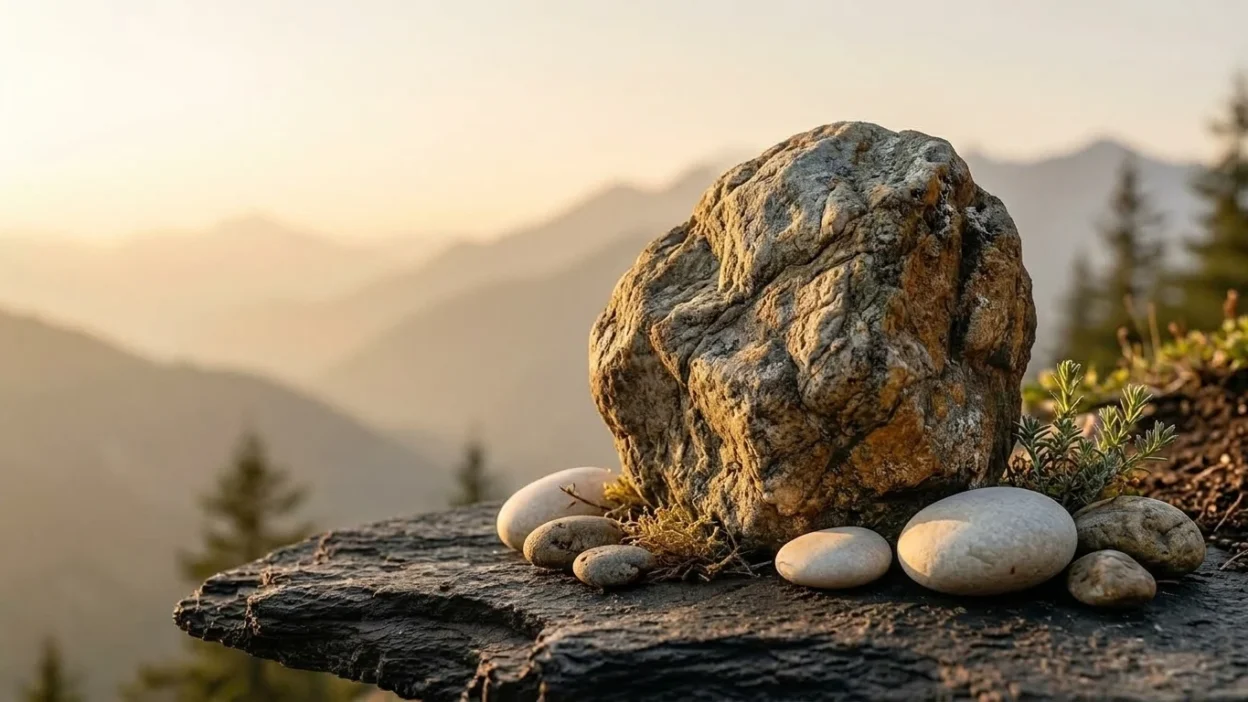
Rock symbolism is closely connected with strength, stability, endurance, grounding, protection, resilience, and permanence. Rocks have existed across landscapes for thousands of years, shaped slowly by weather, water, heat, pressure, and time.
Because they can remain in place while everything around them changes, rocks often symbolize qualities that endure through difficult circumstances. At the same time, their ability to erode and transform reminds us that even the strongest things are affected by time.
Understanding rock symbolism can offer insight into spirituality, dreams, relationships, personal growth, and the way humans have connected with the natural world.
Rock Symbolism Meaning (Clear Definition)
Rock symbolism refers to the meanings people associate with rocks based on their physical qualities, natural environment, cultural traditions, religious imagery, and personal experiences.
The most common meaning of a rock is strength. Rocks can withstand pressure and harsh environmental conditions, making them natural symbols of resilience and durability.
Rocks also represent stability. A large rock can remain firmly in place despite changing weather, moving water, or shifting landscapes. This makes it an image of something dependable and grounded.
Common meanings associated with rock symbolism include:
- Strength – inner power and the ability to withstand hardship.
- Stability – emotional or physical steadiness.
- Resilience – recovering and continuing after challenges.
- Grounding – staying connected to reality and the present.
- Protection – safety, shelter, and strong boundaries.
- Endurance – surviving through time and difficulty.
- Permanence – something that remains meaningful over long periods.
- Transformation – gradual change caused by nature and experience.
The specific meaning can change according to the type and setting of the rock. A mountain rock may symbolize enormous strength, while a smooth river rock may suggest peace, patience, and emotional flow.
What Does Rock Symbolism Represent?
Rock symbolism represents the qualities that help people remain steady when life becomes uncertain.
One of its strongest associations is resilience. Rocks are exposed to rain, wind, heat, freezing temperatures, and erosion, yet they can remain for generations. This makes them powerful symbols of persistence.
Rocks also represent grounding. Their connection to the earth can remind people to slow down, become present, and focus on what is solid rather than becoming overwhelmed by temporary circumstances.
Another important meaning is protection. Rocks can form natural shelters, cliffs, walls, and barriers. Symbolically, they can represent a safe place or the emotional boundaries that protect a person’s well-being.
| Rock Symbolism | Common Meaning |
|---|---|
| Strength | Inner power and courage |
| Stability | Dependability and balance |
| Resilience | Recovery after hardship |
| Grounding | Connection with reality and nature |
| Protection | Safety and boundaries |
| Endurance | Persistence through time |
| Permanence | Lasting values and memories |
| Transformation | Growth through pressure and experience |
Rock symbolism can also have a more challenging meaning. Something described as “rock-like” may suggest emotional hardness, stubbornness, or resistance to change.
This creates an important balance: strength is valuable, but becoming completely rigid can prevent growth.
Spiritual Meaning of Rock Symbolism
Spiritually, rocks often symbolize grounding, protection, strength, patience, stability, and connection with the earth.
Their slow formation and gradual transformation can represent the patience required for personal and spiritual development. A rock does not change overnight, yet wind and water can reshape it over enormous periods of time.
This makes rock symbolism a useful reminder that meaningful transformation does not always happen quickly.
A rock can also represent a strong spiritual foundation. Just as a structure needs a dependable base, people often need stable values, beliefs, relationships, and principles to navigate uncertainty.
In spiritual symbolism, a rock may encourage you to:
- Remain grounded during difficult periods.
- Build your life on stable principles.
- Develop patience with gradual growth.
- Protect what is important to you.
- Learn from experiences without losing your foundation.
- Accept change without abandoning your core identity.
A rock can therefore symbolize quiet strength. It does not need to move quickly or make noise to demonstrate its presence.
Biblical / Religious Meaning of Rock Symbolism
Rock imagery has an important place in biblical and religious traditions. In the Bible, rocks can represent strength, refuge, foundation, protection, permanence, and spiritual security.
Several biblical passages use rock imagery to describe God as a source of refuge and strength. In these contexts, the rock represents something dependable when circumstances are unstable.
The idea of a strong foundation is also significant in Christian teachings. The image of building on a solid foundation suggests that lasting spiritual life requires dependable principles rather than unstable foundations.
Rocks also appear in stories involving memorials and important events. Stones could be used to remember significant moments, mark places, or serve as physical reminders of religious experiences.
At the same time, biblical rock imagery is not limited to positive meanings. A rock can also represent an obstacle or something that causes difficulty depending on the context.
Therefore, the religious meaning of a rock should be interpreted according to the specific passage, tradition, and symbolism involved rather than assuming one universal definition.
Rock Symbolism in History and Culture
Rocks have played a major role in human history because they are both natural materials and lasting cultural objects.
Early humans used stone and rock for tools, shelters, weapons, monuments, and structures. Over time, rocks became part of architecture, burial traditions, religious sites, boundary markers, and memorials.
Large stones have often been associated with important places. Stone circles, standing stones, temples, tombs, and monuments demonstrate humanity’s desire to create structures that could survive across generations.
Rocks also became connected with ancestry and memory. A carved stone could preserve a name, event, or story long after the original people had disappeared.
Different landscapes developed their own symbolic meanings. Mountains and cliffs could represent power and permanence, while caves might symbolize mystery, protection, or hidden knowledge.
River rocks, meanwhile, are often associated with movement and patience because flowing water gradually smooths their rough edges.
This combination of strength and transformation makes rocks especially meaningful across cultures. They can remain solid while still being shaped by the forces around them.
Rock Symbolism in Literature and Art
Writers and artists frequently use rocks to communicate ideas about endurance, isolation, emotional resistance, and permanence.
In literature, a rock may symbolize an obstacle that a character must overcome. A person standing before a huge rock or mountain can represent someone confronting a difficult challenge.
Rocks can also symbolize emotional hardness. A character described as “cold as stone” or “hard as rock” may be portrayed as distant, guarded, or unwilling to show vulnerability.
Yet rock imagery can communicate comfort as well. A dependable rock may represent a trusted friend, strong relationship, or reliable source of support.
Artists have also used rocks and stone landscapes to explore the relationship between humans and nature. A massive cliff can make a person appear small, emphasizing the scale and power of the natural world.
Sculpture adds another layer to rock symbolism. An artist begins with a rough block and gradually reveals a form hidden within it. This process can symbolize transformation, patience, discipline, and self-discovery.
Dream Meaning of Rock Symbolism
Dreaming about rocks can have different symbolic meanings depending on the dream’s details and your emotional response.
A large rock may represent strength, responsibility, or an obstacle that seems difficult to move.
Climbing rocks may symbolize determination, ambition, or the effort required to overcome challenges.
Carrying a heavy rock can represent emotional weight, responsibility, pressure, or something you have been holding onto for a long time.
Throwing a rock may symbolize anger, confrontation, frustration, or the desire to release something.
Finding a smooth rock may suggest peace, stability, acceptance, or emotional healing.
Standing on a rock can symbolize confidence, security, or a desire to feel more stable.
The emotional atmosphere of the dream is important. A peaceful rocky landscape may suggest grounding and strength, while a frightening or unstable rocky environment may reflect uncertainty or pressure.
Dream symbolism is personal rather than predictive. The meaning of a rock in a dream can change according to your experiences, emotions, and circumstances.
Modern Meaning of Rock Symbolism
In modern life, rock symbolism continues to appear in architecture, jewelry, landscaping, art, meditation practices, memorials, and everyday language.
People often use rock imagery to describe someone dependable. Calling someone “a rock” can suggest that the person provides emotional support and remains dependable during difficult moments.
Rocks can also symbolize healthy boundaries. A stone wall creates a physical boundary, making it a natural metaphor for protecting personal space and emotional well-being.
Modern rock symbolism also emphasizes resilience. Life can change rapidly, and the image of a rock offers a reminder to maintain a stable foundation while adapting to circumstances.
However, modern interpretations also recognize the shadow side of being “strong.” Constantly trying to appear unbreakable can make it difficult to express emotions or accept support.
True resilience does not necessarily mean refusing to bend. Like a rock shaped by water over time, strength can include the ability to adapt without losing your essential foundation.
Rock Symbolism in Love and Relationships
In love, rock symbolism often represents commitment, loyalty, trust, stability, and lasting support.
A partner described as “my rock” is usually someone who provides dependable emotional support during challenging periods.
Rocks can also represent relationships that have survived difficult experiences and developed a strong foundation.
However, rock symbolism can have another side. A relationship may become too rigid when people refuse to communicate, compromise, or grow together.
Healthy commitment requires stability as well as flexibility. The strongest relationships can provide a secure foundation while still allowing both people to change.
The Shadow Side of Rock Symbolism
Rock symbolism can represent qualities that become unhealthy when taken to an extreme.
Strength can become stubbornness. Stability can become stagnation. Protection can become isolation. Endurance can become the habit of tolerating unnecessary suffering.
A person who always tries to be “the strong one” may eventually become emotionally exhausted.
The deeper lesson of rock symbolism is therefore balance. You can be grounded without being rigid, protected without becoming isolated, and strong without hiding vulnerability.
What Rock Symbolism Can Teach Us
Rock symbolism offers several practical lessons for everyday life.
Build strong foundations. Important goals and relationships become more sustainable when they are built on trust and clear values.
Stay grounded. When circumstances become chaotic, returning to what truly matters can provide stability.
Respect gradual growth. Rocks are shaped slowly by natural forces. Personal transformation can also take time.
Develop resilience. Difficult experiences can shape character without completely defining who you become.
Protect your boundaries. A strong foundation includes knowing what deserves protection and what should be allowed to change.
Remain adaptable. A rock may appear permanent, yet nature continually reshapes it. Strength and flexibility can exist together.
Frequently Asked Questions About Rock Symbolism
What is the main meaning of rock symbolism?
Rock symbolism commonly represents strength, stability, resilience, grounding, protection, endurance, and permanence. Its meaning can change according to the rock, setting, and cultural context.
What does a rock symbolize spiritually?
Spiritually, a rock can symbolize grounding, protection, patience, inner strength, stability, and a strong foundation. It may also represent a lasting connection with nature.
What does a rock symbolize in dreams?
A rock in a dream may represent stability, strength, an obstacle, emotional weight, or something enduring in your life. The surrounding details and emotions help shape the interpretation.
What does a rock symbolize in love?
In relationships, a rock commonly represents loyalty, trust, commitment, emotional support, and stability. In a negative context, it can symbolize emotional distance or stubbornness.
Why does a rock symbolize strength?
Rocks can withstand pressure, weather, erosion, and changing environmental conditions for long periods. Their durability makes them natural symbols of endurance and resilience.
Conclusion
Rock symbolism reminds us of the value of strength, stability, grounding, resilience, and endurance. Yet rocks also show that strength does not mean remaining unchanged. Water, wind, and time can reshape even the hardest surfaces.
The deeper message is simple: build a strong foundation, stay grounded through difficulty, and remain open to the changes that help you grow.