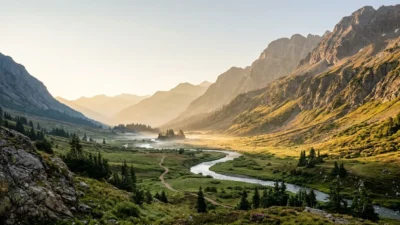
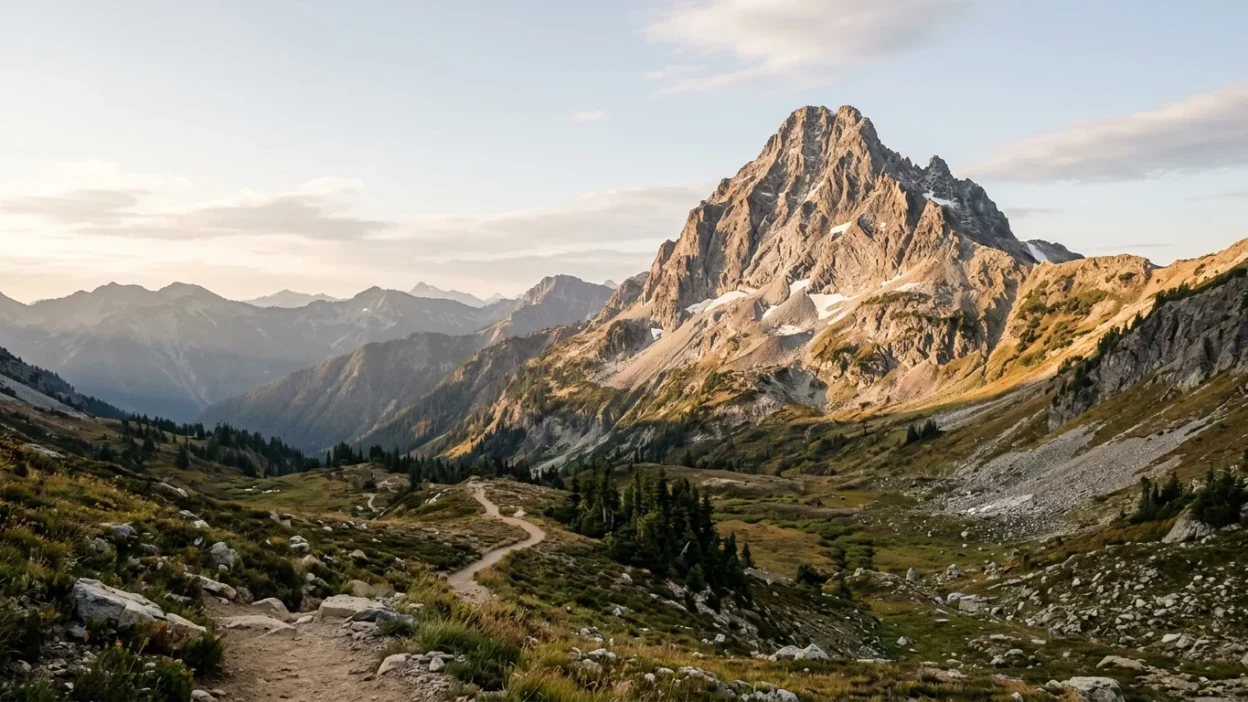
Mountain peak symbolism is often associated with achievement, ambition, spiritual elevation, perseverance, perspective, courage, and personal growth. A mountain peak stands above the surrounding landscape, representing a destination reached through patience, effort, and determination.
For many people, the image of a summit also carries a deeper meaning. Reaching the top can symbolize overcoming obstacles, gaining a new perspective, or discovering inner strength after a difficult journey.
Mountain peak symbolism therefore connects the physical experience of climbing upward with emotional, spiritual, and personal experiences of growth.
Mountain Peak Symbolism Meaning (Clear Definition)
It refers to the meanings associated with the highest point of a mountain and the journey required to reach it.
A mountain peak can symbolize success and achievement, but its meaning goes beyond simply reaching a goal. The climb itself represents effort, uncertainty, discipline, patience, and resilience.
The summit may represent a point where a person can look back at everything they have overcome and see their journey from a new perspective.
Common meanings of mountain peak symbolism include:
- Achievement – reaching an important goal after sustained effort.
- Ambition – pursuing something challenging and meaningful.
- Perseverance – continuing despite obstacles.
- Courage – facing uncertainty and difficult conditions.
- Spiritual elevation – seeking a higher level of awareness or understanding.
- Perspective – seeing life differently after gaining distance from old problems.
- Freedom – experiencing a sense of openness after overcoming limitations.
- Transformation – becoming different through the challenges of the journey.
The meaning can change depending on the image. A person standing peacefully at a summit may represent accomplishment, while an unreachable peak may symbolize a difficult goal or an aspiration still being pursued.
What Does Mountain Peak Symbolism Represent?
Mountain peak symbolism represents the idea of rising above challenges and reaching a meaningful destination.
One of its strongest associations is achievement. The peak is visible from a distance, but reaching it requires preparation and sustained effort. This makes it a natural metaphor for goals that cannot be accomplished instantly.
The mountain peak also represents ambition. Looking toward a summit can symbolize having a clear direction and being willing to work toward something beyond immediate comfort.
Another important meaning is perspective. From a high point, the landscape looks different. In symbolic terms, overcoming a difficult experience can similarly change the way a person understands their life.
| Mountain Peak Symbolism | Common Meaning |
|---|---|
| Achievement | Reaching an important goal |
| Ambition | Pursuing challenging aspirations |
| Perseverance | Continuing despite difficulties |
| Courage | Facing uncertainty and risk |
| Spiritual elevation | Seeking deeper understanding |
| Perspective | Seeing life from a wider viewpoint |
| Freedom | Rising beyond previous limitations |
| Transformation | Growing through challenges |
A mountain peak can also symbolize the temporary nature of achievement. Once someone reaches one summit, another challenge may appear. This suggests that personal growth is often a continuing journey rather than a single final destination.
Spiritual Meaning of Mountain Peak Symbolism
Spiritually, mountain peaks are often associated with higher awareness, divine connection, solitude, contemplation, revelation, and inner transformation.
Mountains naturally rise above ordinary landscapes, which has made them powerful spiritual symbols in many traditions. Their height can represent movement from everyday concerns toward deeper reflection.
The journey upward can also symbolize spiritual discipline. Reaching a higher state of awareness may require patience, self-examination, sacrifice, and perseverance.
A mountain summit can represent a moment of clarity. After a long climb, the person reaches a place where the surrounding landscape becomes visible from a wider perspective. Symbolically, this can reflect gaining wisdom after moving through a difficult period.
Mountain peak symbolism may spiritually encourage you to:
- Keep moving toward meaningful growth.
- Accept challenges as opportunities for learning.
- Make time for solitude and reflection.
- Look beyond immediate problems.
- Trust gradual progress.
- Seek wisdom rather than simply achievement.
- Recognize how far you have already traveled.
The summit does not necessarily represent perfection. Instead, it can symbolize a temporary moment of clarity within a much longer journey.
Biblical / Religious Meaning of Mountain Peak Symbolism
Mountains hold significant religious symbolism, particularly in biblical traditions. They are frequently associated with encounters with God, revelation, prayer, covenant, testing, and spiritual transformation.
Several important biblical events take place on mountains. Mount Sinai is associated with Moses receiving the commandments, while other mountain settings appear in stories involving prayer and divine encounters.
Mountains can therefore represent places set apart from ordinary life. Their height and solitude create a symbolic environment for reflection, revelation, and communication with the divine.
The biblical image of ascending a mountain can also suggest spiritual movement. Going upward may symbolize approaching a sacred encounter or moving toward greater understanding.
However, religious mountain symbolism does not mean that every mountain or peak has one fixed interpretation. The meaning depends on the specific scripture, tradition, and context.
In Christianity, mountains are also connected with important events in the life of Jesus, including the Transfiguration. Such passages contribute to the long-standing association between mountains, spiritual revelation, and transformation.
Mountain Peak Symbolism in History and Culture
Mountains have influenced human cultures for thousands of years because of their imposing size, isolation, and relationship with the sky.
Many ancient societies considered mountains sacred or connected them with gods, ancestors, creation, or supernatural forces. Their height naturally encouraged people to associate them with the heavens.
Mountain peaks also served practical cultural purposes. They could act as landmarks, territorial boundaries, pilgrimage destinations, or places of observation.
As exploration and mountaineering developed, the summit gained another meaning: human achievement.
Climbing a difficult peak became a demonstration of endurance, preparation, courage, and determination. The summit could represent the completion of an extraordinary challenge.
Modern culture has expanded this symbolism beyond literal mountains. Expressions such as “reaching the top” or “climbing the ladder” use upward movement as metaphors for achievement, career development, and personal success.
Yet many cultures also recognize that mountains are not simply obstacles to conquer. They can represent places for reflection, humility, beauty, and connection with nature.
Mountain Peak Symbolism in Literature and Art
Mountain peaks have been powerful symbols in literature, painting, photography, poetry, and film.
Writers often use mountains to represent difficult journeys. A character climbing toward a summit may be physically traveling upward while also confronting fear, uncertainty, grief, ambition, or self-doubt.
The peak can represent an objective that seems distant at first but becomes achievable through persistence.
Artists have also used mountain landscapes to communicate awe and human humility. A tiny human figure standing beneath a huge mountain can emphasize the immense scale of nature.
In poetry, the summit may represent enlightenment, victory, solitude, or the search for meaning.
The contrast between the valley and the peak is particularly powerful. The valley can symbolize ordinary life, uncertainty, or struggle, while the summit represents clarity, achievement, or a wider perspective.
But the relationship can also work in reverse. From a summit, a person can look back toward the valley and recognize that the difficult journey was itself part of the experience.
Dream Meaning of Mountain Peak Symbolism
Dreaming about a mountain peak can symbolize goals, challenges, ambition, achievement, personal growth, or the desire for a new perspective.
The details of the dream are important.
Reaching a mountain peak may symbolize accomplishment, confidence, or satisfaction after overcoming a challenge.
Struggling to climb may reflect difficulties associated with an important goal or responsibility.
Seeing a distant peak can represent an aspiration that feels meaningful but still far away.
Standing alone at the summit may suggest independence, reflection, achievement, or a desire for solitude.
Falling from a peak can symbolize fear of failure, losing control, or anxiety about maintaining an achievement.
Looking at a beautiful mountain peak may represent inspiration, hope, or a desire for personal transformation.
Dream interpretation is personal rather than predictive. The emotions you experience during the dream can be just as meaningful as the mountain itself.
Modern Meaning of Mountain Peak Symbolism
Today, mountain peak symbolism often represents personal goals, resilience, ambition, self-improvement, and meaningful achievement.
The summit has become a common metaphor for reaching an important milestone. Someone may describe completing a difficult project, recovering from a major setback, or accomplishing a long-term goal as “reaching the summit.”
However, modern interpretations increasingly recognize that success is not always about reaching the highest possible point.
The journey matters too.
A person may discover patience, confidence, friendships, wisdom, or self-awareness while working toward a goal. These experiences can remain valuable even when the original destination changes.
Mountain Peak Symbolism in Love and Relationships
In relationships, a mountain peak can symbolize shared goals, commitment, perseverance, and overcoming challenges together.
Two people climbing toward the same summit can represent partners supporting one another through difficult periods.
The peak may also symbolize an important milestone, such as building trust, overcoming a conflict, or reaching a deeper level of commitment.
However, relationships are not competitions. Healthy partnership involves supporting each other’s individual journeys rather than treating one person as more successful than the other.
The Shadow Side of Mountain Peak Symbolism
Mountain peak symbolism has a less comfortable side as well.
The desire to reach the top can become pressure, perfectionism, excessive ambition, or fear of failure.
Someone who focuses only on the summit may overlook the journey and the people around them. Constantly pursuing the next achievement can also make it difficult to appreciate the present moment.
The peak can therefore teach an important lesson: achievement has value, but a meaningful life is not defined only by how high you climb.
What Mountain Peak Symbolism Can Teach Us
Mountain peak symbolism offers several lessons that can apply to everyday life.
Progress takes effort. Important goals often require patience and consistent action.
Obstacles can shape character. Difficult climbs can develop resilience, discipline, and courage.
Perspective changes with distance. Problems that seem overwhelming from below may look different after you gain emotional or physical distance.
The journey matters. Reaching a destination is only one part of personal growth.
Rest is necessary. Even a determined climber must pause, recover, and assess the path ahead.
Success can be personal. Your meaningful summit does not have to be someone else’s definition of achievement.
Stay humble. A high position can provide perspective, but it can also remind us of the enormous world beyond ourselves.
Frequently Asked Questions About Mountain Peak Symbolism
What is the main meaning of mountain peak symbolism?
Mountain peak symbolism commonly represents achievement, ambition, perseverance, courage, spiritual elevation, perspective, and personal growth. The meaning depends on the context and the individual’s experience.
What does a mountain peak symbolize spiritually?
Spiritually, a mountain peak can represent higher awareness, divine connection, revelation, contemplation, and transformation. The climb may symbolize the effort involved in spiritual growth.
What does reaching a mountain peak mean in dreams?
Reaching a mountain peak in a dream may symbolize accomplishment, confidence, overcoming obstacles, or reaching an important personal milestone. The emotions experienced in the dream provide additional context.
What does a mountain peak symbolize in love?
A mountain peak can symbolize shared goals, commitment, perseverance, and overcoming challenges together. It may represent a relationship reaching an important stage of growth.
Why do mountain peaks symbolize achievement?
A peak is the highest point of a mountain and usually requires effort to reach. This makes it a natural metaphor for accomplishing a difficult goal after persistence and preparation.
Conclusion
Mountain peak symbolism captures the powerful idea of rising through challenge, gaining perspective, and discovering what you are capable of becoming. The summit may represent achievement, but the climb gives the symbol its deeper meaning.
Every difficult ascent can teach patience, courage, humility, and resilience. Sometimes the most important discovery is not what waits at the top, but who you become along the way.