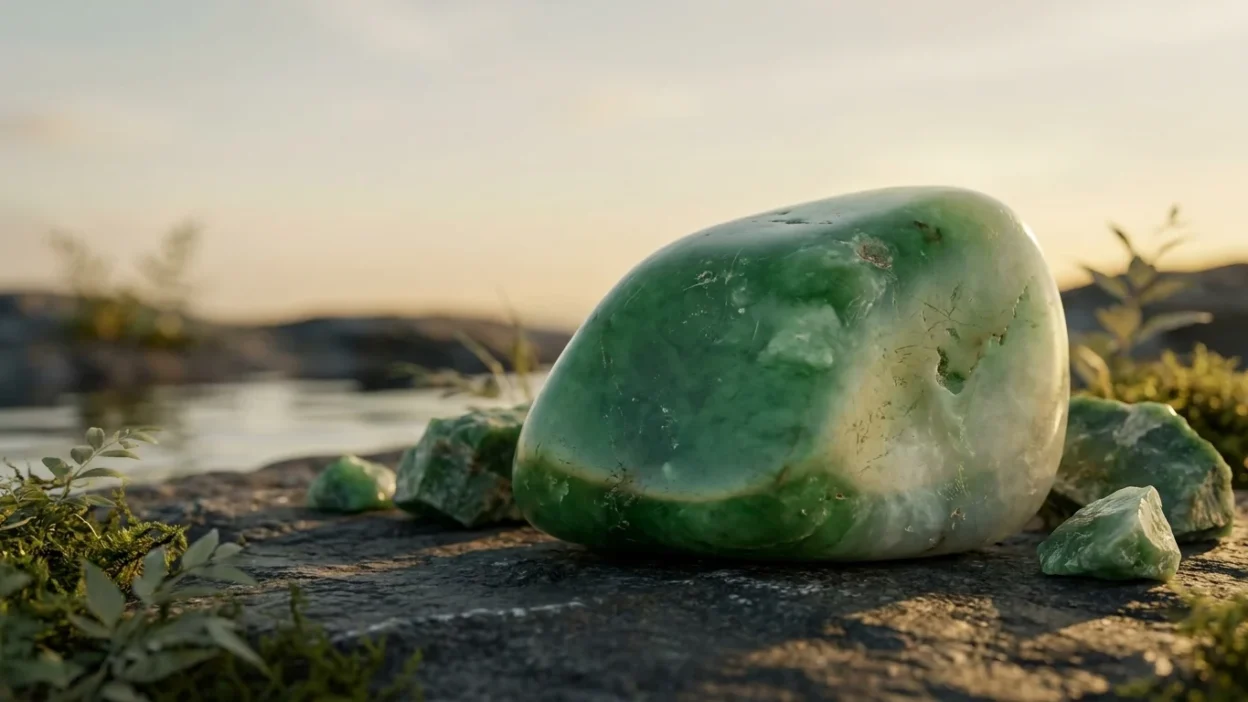
Jade symbolism is deeply connected with harmony, wisdom, protection, prosperity, balance, and renewal. For thousands of years, this beautiful stone has been valued not only for its appearance but also for the meanings different cultures have given it.
Although green jade is especially famous, jade can occur in several colors, including white, lavender, yellow, black, and reddish shades. Across history, jade has often represented qualities that people hope to cultivate in life: patience, integrity, peace, resilience, and good fortune.
From ancient ceremonial objects to modern jewelry, jade continues to carry a sense of timelessness. Its symbolism encourages us to appreciate quiet strength, emotional balance, and the value of living with purpose.
Jade Symbolism Meaning (Clear Definition)
Jade symbolism represents harmony, protection, wisdom, prosperity, good fortune, emotional balance, purity, resilience, and renewal.
It is actually a broad name associated with two different minerals: jadeite and nephrite. Both have been valued for their toughness, beauty, and usefulness in carving.
Symbolically, jade is often understood as a stone of balanced strength. It is hard and durable, yet its smooth appearance can create an impression of calmness and gentleness.
This combination gives jade a distinctive symbolic character. It suggests that strength does not always have to appear aggressive. Sometimes strength means remaining steady, compassionate, and grounded when circumstances become difficult.
Jade can therefore represent the ability to protect what matters while maintaining peace within yourself.
What Does Jade Symbolism Represent?
Jade symbolism carries several meanings that have developed through different cultures and historical traditions.
| Symbolic Meaning | What It Represents |
|---|---|
| Harmony | Peace, cooperation, and emotional balance |
| Protection | Safety, guardianship, and spiritual security |
| Wisdom | Good judgment, learning, and thoughtful choices |
| Prosperity | Abundance, success, and good fortune |
| Purity | Integrity, sincerity, and moral character |
| Renewal | Growth, recovery, and fresh beginnings |
| Resilience | Endurance, patience, and inner strength |
| Love | Compassion, loyalty, and lasting connection |
One of jade’s strongest symbolic themes is harmony. Its smooth surface and natural green color are often associated with nature and balance.
Jade is also connected with protection. Throughout history, jade objects have been used in ceremonial and personal contexts where protective meanings were important.
Another major theme is prosperity. In several East Asian cultural traditions, jade has been associated with good fortune, wealth, status, and blessings.
Other common symbolic meanings include:
- Peace and harmony
- Wisdom and good judgment
- Protection and security
- Prosperity and abundance
- Love and compassion
- Emotional balance
- Longevity and endurance
- Renewal and personal growth
These meanings are cultural and symbolic rather than scientific claims about the stone’s physical powers.
Spiritual Meaning of Jade Symbolism
Spiritually, jade symbolism is often associated with inner peace, balance, compassion, wisdom, and personal growth.
Its connection with nature gives jade a particularly grounded spiritual character. Rather than symbolizing sudden or dramatic transformation, it often represents gradual development and steady progress.
For people who use gemstones as personal spiritual symbols, jade may serve as a reminder to remain calm while moving through change.
Jade can symbolically represent:
- Finding peace during stressful periods
- Developing greater emotional balance
- Practicing patience
- Protecting personal boundaries
- Growing through life experiences
- Choosing compassion over anger
- Building a stronger connection with nature
Its symbolism can also be connected with the idea of living in harmony with others. Instead of focusing only on individual achievement, jade encourages consideration, cooperation, and mutual respect.
In this sense, jade represents a form of spirituality grounded in everyday behavior: patience, kindness, self-control, and thoughtful decisions.
Biblical / Religious Meaning of Jade Symbolism
Jade does not have the same direct biblical significance as stones such as sapphire, emerald, or amethyst. The Bible does not establish a specific symbolic meaning for jade in the way later traditions have done for some gemstones.
However, jade’s broader symbolic themes—wisdom, integrity, protection, beauty, and prosperity—can overlap with values found in many religious traditions.
In Christianity, these qualities may be discussed through broader teachings about wisdom, compassion, humility, stewardship, and faithful living rather than through jade itself.
Jade has a much more established historical and cultural significance in East Asian traditions, particularly in China. Its symbolic importance there developed through philosophy, ritual, social values, art, and imperial culture.
Therefore, it is useful to distinguish between biblical symbolism and the cultural symbolism that has developed around jade in other parts of the world.
Jade Symbolism in History and Culture
Jade has an exceptionally long history of human use. Archaeological evidence shows that jade objects were made and valued in different parts of the world long before modern gemstone jewelry became common.
China is especially important to the history of jade. Jade was carved into ritual objects, ornaments, jewelry, burial objects, decorative pieces, and symbols of status.
In traditional Chinese thought, jade became associated with desirable moral qualities. Classical writings connected jade with virtues such as benevolence, righteousness, wisdom, courage, and purity.
Because jade is difficult to break and can be polished to a beautiful surface, it became an appealing metaphor for character. A person could be compared symbolically to jade when admired for integrity, dignity, or moral strength.
Jade also held significance among Indigenous cultures of the Americas, including the Maya and other Mesoamerican civilizations. Greenstone objects could carry religious, political, and ceremonial importance.
The exact meaning of jade has therefore varied across societies. Yet themes such as status, protection, beauty, spirituality, endurance, and connection with nature appear repeatedly.
Jade Symbolism in Literature and Art
Jade has been a powerful artistic symbol because it combines natural beauty with physical durability.
In Chinese poetry, literature, and visual art, jade has often been used as a metaphor for admirable qualities. A person described through jade imagery may be associated with purity, refinement, dignity, or virtue.
Artists have also valued jade because it can be carved into highly detailed forms. Animals, plants, mythical creatures, religious figures, vessels, jewelry, and decorative objects have all been created from jade.
The symbolic meaning of these objects often depends on their subject. A jade dragon, for example, may carry different cultural associations from a jade lotus or jade pendant.
Jade’s green color also connects it naturally with vegetation and the living world. In artistic contexts, this can make jade an effective symbol of renewal, vitality, growth, and harmony with nature.
The contrast between rough stone and finely carved artwork creates another meaningful image: beauty and refinement can emerge through patience and careful work.
Dream Meaning of Jade Symbolism
Dreaming about jade can be interpreted as a symbolic reflection of your emotions, experiences, and current circumstances. It should not be treated as a prediction of future events.
Seeing jade in a dream may represent a desire for peace, stability, protection, prosperity, or emotional balance.
Finding jade could symbolize discovering something valuable within yourself, such as confidence, wisdom, patience, or an overlooked personal strength.
Receiving jade from someone may represent trust, affection, respect, or support. Giving jade away could symbolize generosity, loyalty, or sharing something meaningful with another person.
Common symbolic interpretations include:
- Green jade: growth, harmony, healing, or renewal
- White jade: purity, clarity, peace, or sincerity
- Black jade: protection, strength, and emotional boundaries
- Jade jewelry: identity, relationships, or personal values
- Finding jade: discovering hidden value or wisdom
- Broken jade: change, disappointment, or concerns about stability
- Bright jade: hope, abundance, or renewed confidence
The emotional feeling of the dream matters as much as the object itself. A peaceful jade dream may suggest something very different from a dream involving fear, loss, or conflict.
Modern Meaning of Jade Symbolism
Today, jade continues to be used in jewelry, decorative art, cultural ceremonies, collections, and personal accessories.
Modern jade symbolism often focuses on balance, protection, prosperity, self-care, resilience, and connection with nature.
Some people choose jade jewelry because they appreciate its cultural history and visual beauty. Others see it as a personal reminder of qualities such as patience, calmness, or emotional strength.
Jade can also symbolize sustainable growth. Its long history and natural origin make it an appealing representation of living with greater awareness of the natural world.
Jade Symbolism in Love and Relationships
Jade can symbolize loyalty, compassion, harmony, and emotional stability in relationships.
Rather than representing only intense passion, its symbolism often suggests a love that becomes stronger through patience, trust, and mutual understanding.
A jade gift may therefore carry meanings of appreciation, protection, friendship, or lasting affection, depending on the cultural context and the relationship between the people involved.
The Shadow Side of Jade Symbolism
Jade has many positive associations, but symbolic interpretation can also have a less comfortable side.
Its connection with stability and harmony may sometimes represent resistance to change. A person can become so focused on maintaining peace that they avoid necessary conversations or personal growth.
Likewise, the association with prosperity can become unbalanced if material success becomes more important than relationships, integrity, or inner peace.
The deeper lesson is balance. Jade can symbolize abundance without excess, protection without isolation, and stability without stagnation.
What Jade Symbolism Can Teach Us
Jade symbolism offers a simple but meaningful lesson: lasting strength can be calm, patient, and compassionate.
Jade does not need to appear dramatic to be valuable. Its symbolism reminds us that character develops through consistent choices, patience, and integrity.
It also encourages a balanced understanding of prosperity. True abundance can include meaningful relationships, peace of mind, wisdom, healthful surroundings, and a sense of purpose—not only material wealth.
Like a piece of jade shaped carefully over time, personal growth often happens gradually. What matters is not becoming perfect, but becoming more grounded, thoughtful, and resilient.
Frequently Asked Questions About Jade Symbolism
What is the main meaning of jade symbolism?
The main meanings of jade symbolism include harmony, protection, wisdom, prosperity, good fortune, emotional balance, resilience, and renewal.
What does jade symbolize spiritually?
Spiritually, jade often symbolizes inner peace, compassion, balance, wisdom, protection, and gradual personal growth.
What does jade symbolize in Chinese culture?
In traditional Chinese culture, jade has been associated with virtue, dignity, wisdom, purity, status, and moral character, among other meanings.
What does dreaming about jade mean?
Dreaming about jade may symbolically reflect desires for stability, protection, prosperity, wisdom, emotional balance, or personal growth.
What does green jade symbolize?
Green jade is commonly associated with harmony, renewal, nature, growth, prosperity, and emotional balance.
Conclusion
Jade symbolism represents a beautiful combination of strength and serenity. Its long cultural history connects it with wisdom, harmony, protection, prosperity, integrity, and renewal.
Whether appreciated as a gemstone, cultural object, artistic material, or personal symbol, jade reminds us that meaningful strength can develop quietly through patience, balance, and thoughtful living.

Miles Maverick is a content writer and symbolism enthusiast at BibloSign.com, specializing in symbol meanings, cultural interpretations, and historical symbolism, helping readers discover deeper insights behind signs, icons, and symbolic traditions.