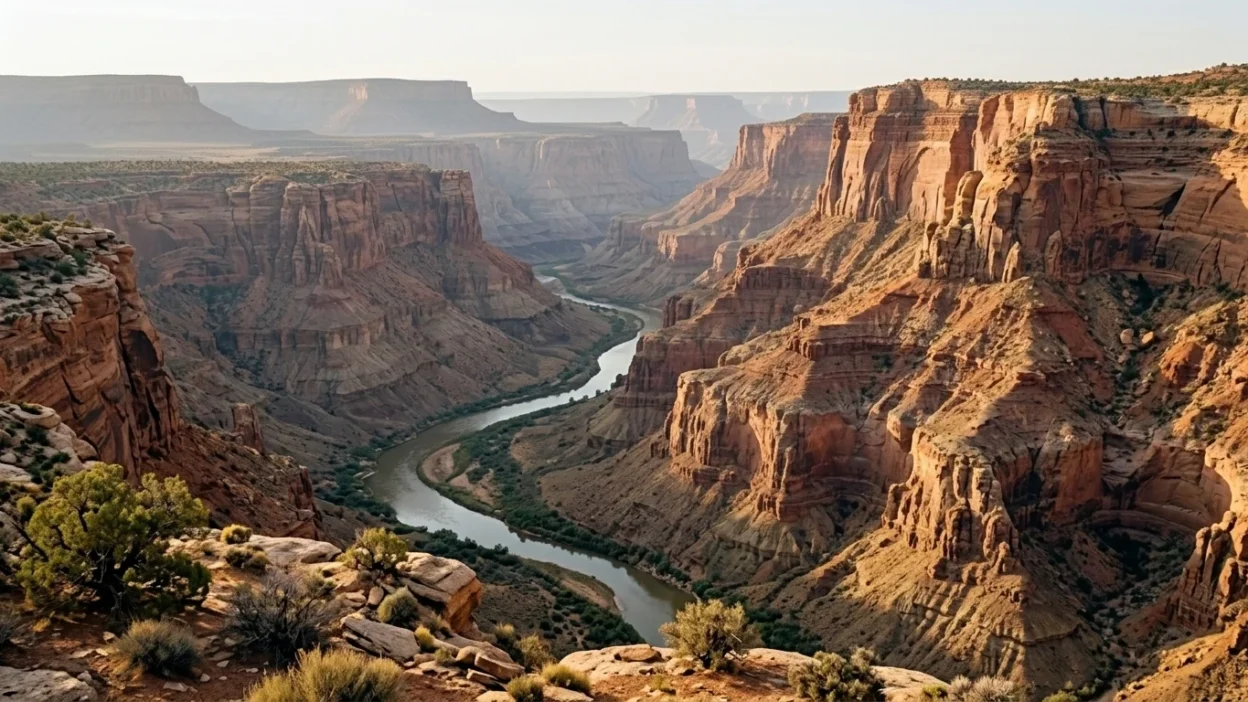
Canyon symbolism represents strength, depth, transformation, perseverance, and the journey through life’s challenges. Formed over long periods by the forces of water, wind, and erosion, a canyon reveals how patience and persistence can shape even the hardest landscapes. Its towering walls and deep valleys make it a powerful symbol of resilience, hidden emotions, and personal growth.
A canyon can represent a difficult period that requires courage to navigate, a deep emotional divide between people, or a quiet place for reflection and discovery. Its meaning often depends on whether the canyon appears peaceful, dangerous, vast, or inviting.
Whether encountered in nature, a dream, a spiritual reflection, or a work of art, canyon symbolism reminds us that depth can hold beauty, challenges can create wisdom, and even the longest journey can reveal a new perspective.
Canyon Symbolism Meaning (Clear Definition)
Canyon symbolism refers to the meanings associated with deep, narrow valleys carved into the earth, including resilience, endurance, emotional depth, transformation, separation, and discovery.
Canyons are shaped gradually by natural forces, especially flowing water and erosion. Their formation makes them natural symbols of persistence, illustrating how small but consistent forces can produce extraordinary changes over time.
Their great depth can also suggest the hidden layers of human experience. Just as a canyon contains rock formations that reveal different periods of geological history, people carry memories, emotions, and experiences that shape who they become.
Common meanings of canyon symbolism include:
- Strength and resilience: Remaining steady through difficult circumstances.
- Patience and endurance: Recognizing that meaningful change often takes time.
- Emotional depth: Exploring feelings and experiences beneath the surface.
- Transformation: Growing through challenges and significant life changes.
- Separation: Experiencing distance, conflict, or barriers between people.
- Discovery: Exploring unfamiliar places or hidden aspects of yourself.
- Perspective: Seeing life differently when you step back from immediate problems.
- Freedom and adventure: Finding courage to explore beyond familiar boundaries.
At its core, canyon symbolism reflects the relationship between time, challenge, and transformation. It reminds us that depth is often created through experiences that gradually shape our lives.
What Does Canyon Symbolism Represent?
Canyons carry several interconnected symbolic meanings. Their interpretation often depends on the landscape, the surrounding environment, and the emotions they inspire.
Strength and Resilience
Canyons are impressive examples of nature’s endurance. Some develop over millions of years as rivers slowly cut through layers of rock, creating deep valleys and dramatic cliffs.
This process makes a canyon a symbol of resilience. It suggests that strength does not always appear as sudden action or dramatic achievement. Sometimes, strength means continuing steadily through circumstances that cannot be changed overnight.
In everyday life, canyon symbolism can encourage perseverance during demanding periods. It reminds us that difficult experiences do not have to define us negatively; they can also contribute to wisdom, confidence, and maturity.
Emotional Depth and Hidden Feelings
The depth of a canyon can represent the complexity of human emotions. A person may appear calm on the surface while carrying memories, fears, hopes, and experiences that others cannot easily see.
Canyon symbolism encourages deeper self-understanding. Rather than judging yourself or others based on outward appearances, it invites you to explore what lies beneath the surface.
A deep canyon may also symbolize the process of confronting difficult feelings. This can involve acknowledging grief, understanding fear, or recognizing desires that have remained hidden for a long time.
Transformation Through Time
A canyon is not created in a single moment. Its shape develops through countless natural processes working over extended periods.
Symbolically, this makes it an image of gradual transformation. Personal growth can happen in much the same way: small decisions, repeated efforts, and ordinary experiences gradually change how we think and live.
The canyon reminds us that progress does not always need to be dramatic to be meaningful. Even when change seems invisible, steady effort can eventually create a different path.
Separation and Emotional Distance
A canyon can form a physical barrier between two sides of a landscape. In symbolic interpretations, this separation may represent a disagreement, an emotional divide, or distance between people who once felt close.
A deep canyon between two people might suggest unresolved conflict or difficulty communicating.
However, separation does not always mean permanent disconnection. A bridge across a canyon can represent reconciliation, understanding, or the willingness to overcome differences.
Freedom, Adventure, and Discovery
Canyons often inspire curiosity because their winding paths, hidden formations, and dramatic views invite exploration.
They can symbolize the desire to move beyond familiar surroundings and discover something new. A journey into a canyon may represent a willingness to face uncertainty in exchange for personal growth.
This symbolism also highlights courage. Exploring an unfamiliar landscape requires preparation, awareness, and respect for potential risks. Similarly, meaningful life changes often require both enthusiasm and careful judgment.
Perspective and Humility
Looking down into a vast canyon can change how a person experiences scale, time, and personal importance. Ancient rock layers may reveal a history far longer than any individual lifetime.
This can symbolize humility and perspective. Everyday problems may feel overwhelming when viewed closely, but stepping back can help reveal a broader picture.
Canyon symbolism encourages us to consider the larger context of our experiences without dismissing the emotions that make those experiences important.
A Quick Guide to Canyon Symbolism
| Canyon image or situationCommon symbolic meaning | |
|---|---|
| Deep canyon | Emotional depth, hidden truths |
| Vast canyon landscape | Perspective, humility, wonder |
| River flowing through a canyon | Persistence, change, renewal |
| Steep canyon walls | Obstacles, boundaries, endurance |
| Walking through a canyon | Personal growth, exploration |
| Crossing a canyon bridge | Reconciliation, connection, courage |
| Dark canyon passage | Uncertainty, fear, introspection |
| Sunlight reaching the canyon floor | Hope, understanding, discovery |
These meanings are interpretive rather than universal. Personal memories, cultural traditions, and the details of a particular experience can change what a canyon represents.
Spiritual Meaning of Canyon Symbolism
Spiritually, a canyon can represent an inward journey, the discovery of deeper wisdom, and the growth that develops through challenging experiences. Its vastness may encourage humility, while its depth can symbolize the hidden dimensions of the self.
A Journey Into the Inner Self
A canyon’s winding passages can represent the process of exploring your inner world. This journey may involve questioning old beliefs, understanding your emotions, and discovering values that guide your decisions.
The symbolism suggests that self-knowledge often requires patience. Some answers become clear only after you spend time reflecting on experiences that initially seemed confusing.
Like exploring a canyon, inner exploration can reveal unexpected beauty alongside difficult terrain.
Strength Through Spiritual Challenges
Many people experience periods when their beliefs, values, or sense of purpose are tested. These periods may feel like descending into a deep valley without knowing exactly where the path leads.
Canyon symbolism can represent the courage needed to continue during such times.
It does not suggest that suffering is necessary for spiritual growth. Rather, it recognizes that people sometimes discover greater compassion, clarity, or resilience while working through difficult experiences.
The Sacredness of Nature
Canyons can inspire awe through their scale, colors, silence, and ancient rock formations. Standing within one may create a sense of connection to the natural world and a greater awareness of time.
For some people, this experience encourages spiritual reflection. Others may experience it through wonder, gratitude, or a renewed commitment to protecting the environment.
In this sense, a canyon can symbolize the value of slowing down and recognizing that human life exists within a much larger natural world.
Finding Light in Deep Places
Sunlight reaching the bottom of a canyon offers a meaningful image of hope. Even a place surrounded by towering cliffs can contain warmth, color, vegetation, and life.
Spiritually, this contrast can represent the possibility of finding meaning during difficult periods.
The message is not that every struggle has an easy solution. It is that uncertainty does not eliminate the possibility of insight, support, or renewal.
Biblical / Religious Meaning of Canyon Symbolism
Canyons are not assigned one universal symbolic meaning in the Bible. However, their physical characteristics can be compared with biblical themes involving valleys, wilderness, refuge, humility, and trust during difficult circumstances.
These comparisons should be understood as interpretations rather than direct biblical definitions of a canyon.
Valleys as Places of Difficulty and Trust
Psalm 23:4 describes walking through the valley of the shadow of death while trusting in God’s presence. The verse uses a valley as an image of danger, vulnerability, and the reassurance of divine companionship.
A canyon can evoke similar feelings because its depth and steep walls may create a sense of uncertainty or exposure.
Through this comparison, canyon symbolism may remind religious readers that difficult journeys do not necessarily mean they have been abandoned or left without hope.
Wilderness and Spiritual Reflection
Biblical wilderness narratives often involve hardship, dependence, testing, and preparation. The Israelites’ journey through the wilderness, for example, includes periods of uncertainty as well as accounts of divine provision.
A canyon is not the same as a biblical wilderness, but its remote and demanding landscape can provide a symbolic setting for reflecting on perseverance and faith.
The image may encourage patience during seasons when the next step is unclear.
Humility Before Creation
Religious reflection often uses the natural world to inspire gratitude and humility. A vast canyon can remind people of the scale, complexity, and enduring power of creation.
For some, this experience strengthens appreciation for God’s creation. For others, it encourages reverence for nature and a sense of responsibility toward the earth.
The specific religious meaning depends on the person’s tradition and interpretation.
Canyon Symbolism in History and Culture
Canyons have shaped human settlement, travel, cultural traditions, and relationships with the natural environment. Their physical presence has influenced how people understand endurance, boundaries, beauty, and the passage of time.
Canyons as Natural Landmarks
Throughout history, canyons have served as recognizable geographical features that influence routes, settlement patterns, and access to resources.
Some canyons provide natural corridors along rivers, while others present difficult barriers to movement. These contrasting roles contribute to their symbolism as both pathways and obstacles.
A canyon may therefore represent a challenge that must be approached carefully or a route that leads toward discovery.
Canyons and Indigenous Cultural Heritage
Many canyon landscapes hold deep cultural significance for Indigenous peoples. They may contain ancestral places, archaeological sites, sacred locations, and landscapes connected to oral histories and traditional knowledge.
For example, the Grand Canyon region has longstanding connections to several Indigenous peoples, including the Havasupai, Hualapai, Hopi, Navajo, and Southern Paiute.
Their relationships with these landscapes are diverse and specific to individual communities. It is important not to reduce these traditions to a single general meaning or treat culturally significant places merely as symbols for outsiders.
Canyon symbolism can therefore include ancestry, belonging, continuity, and responsibility toward a living cultural landscape.
Canyons as Images of Endurance
The geological layers visible in canyon walls reveal changes that took place over vast periods. They can preserve evidence of ancient environments, sediments, and natural processes.
This makes canyons powerful images of endurance and historical memory. They remind us that the present is connected to events and transformations that began long before our own lives.
In a personal context, this symbolism can encourage respect for the experiences that shaped us and the lessons passed down through generations.
The Grand Canyon and the Power of Nature
The Grand Canyon is widely recognized for its immense scale, exposed rock layers, and dramatic views. Its appearance inspires wonder and invites reflection on erosion, geological history, and the relationship between water and stone.
Symbolically, it can represent nature’s power, the value of patience, and the importance of preserving extraordinary landscapes.
Its significance also extends beyond scenery, encompassing ecological systems, scientific research, cultural heritage, and tourism.
Canyon Symbolism in Literature and Art
Canyons are powerful settings in literature, poetry, photography, and painting because they combine beauty with danger, openness with confinement, and visible surfaces with hidden depths.
Artists often use canyon landscapes to explore isolation, courage, memory, and the relationship between individuals and the natural world.
Canyons as Symbols of Personal Journeys
In adventure stories, a canyon may become a difficult passage that a character must cross or explore. The landscape creates obstacles that test patience, resourcefulness, and courage.
A character’s journey through a canyon can represent an internal struggle. The physical challenges mirror the emotional or moral questions the character must confront.
Reaching the other side may symbolize progress, but the experience of traveling through the canyon can be equally important.
Canyons and Emotional Depth in Poetry
Poets may use canyons as images of distance, silence, or powerful feelings that are difficult to express.
A canyon separating two landscapes can represent a relationship strained by misunderstanding. Its echoing walls may suggest memories or words that return long after they were spoken.
The depth of a canyon can also evoke emotions that remain hidden until a person is willing to explore them.
Canyons in Visual Art and Photography
Artists and photographers frequently emphasize the dramatic colors, layered rock formations, and changing light of canyon landscapes.
Warm sunlight illuminating a canyon wall can symbolize hope, understanding, or discovery. Deep shadows may suggest mystery, uncertainty, or introspection.
A tiny figure within a vast canyon can communicate humility and the relationship between human life and nature’s scale.
These visual choices influence the meaning of the scene. A canyon is not automatically threatening or peaceful; its symbolism emerges from how the landscape is presented.
Canyons as Symbols of Time
The exposed layers of a canyon can serve as a visual record of geological change. In art and literature, this quality can represent memory, the passage of time, and the lasting effects of past experiences.
The image encourages readers and viewers to look beyond immediate appearances and consider the processes that shaped the present.
Dream Meaning of Canyon Symbolism
Dreaming about a canyon may reflect a difficult decision, emotional depth, a period of uncertainty, or a desire to understand a complicated situation. The dream’s meaning depends on the setting, the events that occur, and the feelings you experience.
Dream interpretations are not scientifically established predictions. They are best used as prompts for personal reflection.
Dreaming of Looking Into a Deep Canyon
Looking into a deep canyon may symbolize confronting something that feels emotionally significant or difficult to understand.
You might be considering a major decision, reflecting on an unresolved problem, or becoming more aware of feelings you have avoided.
If the canyon inspires wonder rather than fear, it may reflect curiosity and a willingness to explore unfamiliar aspects of yourself.
Dreaming of Falling Into a Canyon
Falling into a canyon may reflect a feeling of losing control or uncertainty about a situation.
It could relate to concerns about failure, a difficult transition, or the fear that a problem will become more complicated than expected.
Consider whether something in your waking life feels unpredictable. The dream may encourage you to identify practical sources of support rather than assuming the worst.
Dreaming of Crossing a Canyon
Crossing a canyon may symbolize overcoming an obstacle or moving between two stages of life.
If you cross safely, the dream might reflect growing confidence in your ability to manage a challenge. If the crossing feels frightening, it may reveal uncertainty about the risks involved in an important decision.
A bridge, path, or companion in the dream may offer additional personal associations.
Dreaming of a River Flowing Through a Canyon
A river winding through a canyon may symbolize persistence, emotional movement, and change over time.
The river’s movement can suggest that life continues even when the surrounding circumstances feel difficult. Clear water may evoke calmness or clarity, while turbulent water may reflect stress or strong emotions.
The meaning depends on how you relate to the river and the canyon in the dream.
Dreaming of a Beautiful Canyon
A beautiful canyon with warm sunlight and colorful rock formations may symbolize perspective, wonder, or a renewed appreciation for life.
It could reflect a period of personal discovery or a desire to spend more time in nature.
If the landscape feels peaceful, the dream may invite you to create more space for reflection and reconnect with what gives your life meaning.
Modern Meaning of Canyon Symbolism
In modern life, canyon symbolism often relates to resilience, emotional well-being, environmental protection, personal development, and the importance of perspective.
Overcoming Personal Challenges
A canyon can represent a challenge that requires time, preparation, and persistence. Rather than expecting an immediate solution, the symbol encourages steady progress.
This lesson may apply to career changes, education, personal goals, difficult conversations, or recovery after a setback.
The canyon reminds us that progress is not always a straight line. Sometimes the route forward involves taking a slower path, reassessing our choices, and learning as we go.
Emotional Boundaries and Relationships
The distance between canyon walls can symbolize emotional separation. In relationships, this may reflect misunderstandings, unspoken concerns, or differences that seem difficult to overcome.
A canyon can also represent the space people need to understand themselves before reconnecting with others.
Building a bridge across the canyon offers a contrasting image: communication, empathy, and the willingness to work through differences.
The symbol encourages people to recognize emotional distance without assuming that every divide is permanent.
Environmental Awareness
Canyons are shaped by geological processes and support distinctive habitats, including plant and animal communities adapted to local conditions.
However, these landscapes can be affected by erosion, human activity, pollution, changing water availability, and the pressures associated with tourism.
Modern canyon symbolism can therefore represent the need to protect natural heritage and respect the environments that sustain life.
Responsible recreation, habitat conservation, and care for culturally significant places help preserve these landscapes for future generations.
Adventure and Personal Discovery
For hikers, climbers, photographers, and travelers, canyons can represent exploration and the desire to experience the natural world directly.
Their winding routes and changing scenery encourage curiosity, but they also require preparation and respect for hazards such as steep drops, extreme heat, flash floods, and unstable terrain.
Symbolically, this combination reflects an important lesson about growth: courage is most useful when it works alongside awareness and responsibility.
Canyon Symbolism in Love and Relationships
In love and relationships, canyon symbolism can represent emotional depth, distance, unresolved conflict, and the effort required to rebuild connection.
A deep canyon between two people may suggest that misunderstandings or unspoken feelings have created separation. Even when affection remains, it can become difficult to reach one another without honest communication.
However, a canyon can also represent the depth of a relationship. Its layered walls may suggest the shared experiences, memories, and lessons that accumulate over time.
A bridge across a canyon is especially meaningful in this context. It symbolizes the willingness to listen, acknowledge differences, apologize when appropriate, and work toward understanding.
The symbol also reminds us that healthy relationships require patience. Trust may develop gradually, just as a canyon forms through processes that unfold over time.
Ultimately, canyon symbolism in love encourages people to look beneath surface disagreements and consider the deeper feelings, needs, and experiences that shape their connections.
The Shadow Side of Canyon Symbolism
Although canyons can symbolize beauty, resilience, and discovery, they can also represent fear, separation, and difficult emotional experiences.
Emotional distance: A deep canyon may reflect a divide between people who struggle to communicate or understand each other.
Fear of the unknown: A dark or unfamiliar canyon can symbolize anxiety about situations whose outcomes remain uncertain.
Feeling overwhelmed: Standing before a vast canyon may represent a problem that appears too large to manage.
Isolation: A remote canyon can suggest withdrawal or the feeling of being separated from support.
Hidden difficulties: Deep crevices and unseen paths may symbolize problems that are difficult to recognize until someone looks more closely.
These meanings do not make a canyon a negative symbol. They reveal that growth often involves acknowledging difficulties rather than ignoring them.
The canyon’s lesson is to approach challenging terrain with patience, awareness, and a willingness to seek help when necessary.
What Canyon Symbolism Can Teach Us
Canyon symbolism offers several valuable lessons for everyday life.
First, small efforts can create lasting change. Canyons demonstrate how natural forces can gradually reshape even hard rock. Similarly, consistent actions can produce meaningful progress over time.
Second, depth deserves patience. People and situations are rarely understood through surface appearances alone. Listening, reflection, and curiosity can reveal experiences that might otherwise remain hidden.
Third, perspective can change how we understand challenges. Looking at a problem from a different angle may reveal possibilities that were difficult to see before.
Fourth, connection requires effort. When a canyon represents emotional distance, building a bridge becomes a reminder that trust and understanding often grow through honest communication.
Finally, nature encourages humility and respect. Canyons reveal processes that extend far beyond individual lifetimes, inviting us to appreciate the natural world and protect the places that hold ecological and cultural meaning.
A canyon does not always offer an easy path, but it can teach us to keep moving with care, courage, and a deeper understanding of ourselves.
Frequently Asked Questions About Canyon Symbolism
What does a canyon symbolize spiritually?
A canyon can symbolize inner exploration, resilience, humility, and wisdom gained through difficult experiences. Its depth may represent the journey toward greater self-understanding.
What does a canyon symbolize in dreams?
A canyon in a dream may represent an obstacle, emotional depth, uncertainty, or personal transformation. The dream’s details and your feelings help shape its possible meaning.
Is canyon symbolism positive or negative?
Canyon symbolism can be positive or negative depending on context. It may represent strength, discovery, and perspective, or it may suggest separation, fear, and challenges that require attention.
What does a river flowing through a canyon symbolize?
A river flowing through a canyon often symbolizes persistence, gradual transformation, and the ability to continue moving through difficult circumstances. It can also represent emotional movement and renewal.
What does crossing a canyon symbolize?
Crossing a canyon may symbolize overcoming a major obstacle, making a difficult transition, or reconnecting with someone after a period of separation. The crossing often represents courage combined with patience and careful choices.
Conclusion
Canyon symbolism reminds us that strength develops over time, depth often holds hidden meaning, and difficult journeys can offer new perspectives. Whether a canyon represents resilience, emotional distance, spiritual reflection, or discovery, its enduring message is that change takes patience and meaningful growth often begins when we are willing to explore what lies beneath the surface.

Myla Leah is a passionate writer at BibloSign.com who explores symbol meanings, spiritual symbolism, cultural traditions, and historical interpretations, helping readers uncover the deeper significance behind symbols from around the world.