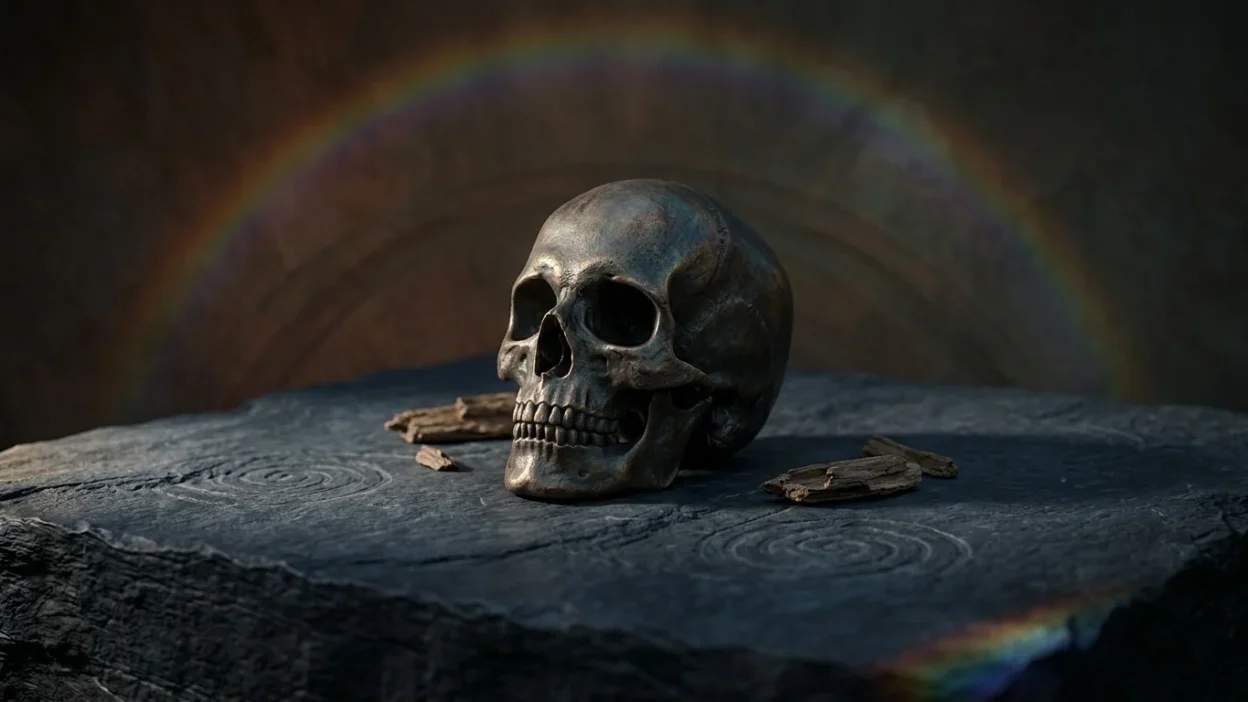
Few images carry as much layered meaning as the human skull. Bold, timeless, and instantly recognizable, it appears everywhere from ancient rituals to modern fashion. That striking versatility is exactly why skull symbolism has captivated cultures and artists for centuries, representing mortality, wisdom, and even protection. Because it sits at the crossroads of life and death, the skull remains one of the most powerful and thought-provoking symbols in human history.
If you’ve ever wondered why the skull carries such deep meaning beyond its association with danger or death, this guide will walk you through everything this iconic symbol truly represents.
Skull Meaning (Clear Definition)
At its core, the skull symbolizes mortality, transformation, and hidden wisdom. Because it houses the mind, the skull has long represented both the fragility of life and the enduring power of thought and identity.
Here’s a quick overview of its core symbolic meaning:
| Symbolic Element | Meaning |
|---|---|
| Housing the Brain | Wisdom, intellect |
| Mortality Reminder | Life’s impermanence |
| Protective Structure | Strength, resilience |
| Death Imagery | Transformation, rebirth |
| Fearless Symbolism | Courage, rebellion |
Because the skull represents both vulnerability and strength, its symbolism often reflects the idea that confronting mortality can lead to greater wisdom and courage.
What Does the Skull Represent?
Overall, skull symbolism touches on several meaningful and powerful themes:
- Mortality – serving as a reminder of life’s fragile and temporary nature
- Wisdom – representing the mind and intellectual depth
- Transformation – often tied to death as a passage rather than an ending
- Protection – symbolizing strength and the ability to guard what’s within
- Rebellion – associated with fearlessness and defying convention
- Honor and remembrance – used to commemorate those who have passed
Together, these themes highlight why the skull continues to be seen as one of the most symbolically rich representations of both mortality and inner strength.
Spiritual Meaning of the Skull
Spiritually, the skull represents transformation, wisdom, and the impermanence of physical life. Because it remains long after other physical features fade, the skull is often associated with what is eternal or unchanging within us.
More specifically, the spiritual meaning of the skull often includes:
- Confronting fears about mortality with acceptance rather than avoidance
- Recognizing the mind’s power and enduring wisdom
- Letting go of ego and surface-level identity
- Embracing transformation as a natural part of spiritual growth
Many spiritual traditions view the skull as a powerful teacher, believing it encourages reflection on life’s deeper meaning beyond physical existence.
Biblical and Religious Meaning of the Skull
In many religious texts, the skull holds symbolic significance tied to mortality, humility, and spiritual reflection.
In biblical and religious interpretations, the skull is often associated with:
- Mortality and the temporary nature of earthly life
- Humility, reminding believers of life’s fragile and fleeting nature
- Sacrifice, historically linked to significant spiritual locations and events
- Reflection on resurrection and hope beyond physical death
Because the skull so consistently represents both mortality and spiritual reflection, it remains a meaningful symbol across various religious traditions.
Skull Symbolism in History and Culture
Throughout history, skulls have carried diverse and powerful cultural meaning.
- Mexican Día de los Muertos traditions – Decorated skulls, or “calaveras,” symbolize a joyful celebration of life and remembrance of loved ones.
- Ancient civilizations – Skulls were often used in rituals symbolizing protection, power, or ancestral connection.
- Medieval European art – Skulls appeared in “memento mori” imagery, reminding people to reflect on life’s impermanence.
- Modern fashion and culture – Skulls continue to symbolize rebellion, fearlessness, and individuality.
Across these cultures, skulls consistently represent mortality, remembrance, and a meaningful connection between life and transformation.
Skull Symbolism in Literature and Art
In literature, skulls often symbolize mortality, hidden truth, or deep philosophical reflection. Writers frequently use skull imagery to explore life’s fragile nature or highlight a character’s confrontation with death and transformation.
Similarly, in visual art, skulls hold significant symbolic weight:
- Representing mortality and the passage of time in classical paintings
- Symbolizing celebration and remembrance in folk and cultural art
- Creating dramatic visual contrast in symbolic compositions
- Reflecting themes of rebellion and individuality in modern artistic expression
Because of their powerful visual impact, skulls continue to be a favorite artistic tool for exploring mortality, memory, and personal identity.
Dream Meaning of the Skull
When a skull appears in dreams, it often carries reflective and transformative symbolism. Common interpretations include:
- Seeing a skull – confronting fears about mortality or major life changes
- Holding a skull – examining personal wisdom or inner truth
- A decorated or colorful skull – celebration, remembrance, or acceptance of life’s cycles
- A damaged or broken skull – processing loss or significant transformation
- A glowing or peaceful skull – spiritual insight or acceptance of mortality
Therefore, these dreams often reflect your emotional relationship with mortality, transformation, and inner wisdom.
Modern Meaning of the Skull
Today, skull symbolism continues to represent fearlessness, transformation, and honest reflection on life’s impermanence. In contemporary culture, the skull serves as a reminder to:
- Embrace individuality and defy unnecessary limitations
- Accept life’s natural cycles, including endings and new beginnings
- Recognize wisdom gained through confronting difficult truths
- Approach mortality with reflection rather than fear
Because of its bold and versatile symbolism, the skull remains widely used in fashion, art, and cultural celebrations, reinforcing its modern identity as a symbol of strength and transformation.
Frequently Asked Questions
What does a skull symbolize?
A skull symbolizes mortality, wisdom, and transformation, representing both life’s fragility and the enduring power of the mind.
What is the spiritual meaning of a skull?
Spiritually, a skull represents life’s impermanence and encourages reflection on deeper wisdom beyond physical existence.
What does it mean to dream about a skull?
Dreaming about a skull often reflects confronting fears about mortality, uncovering hidden truths, or examining personal wisdom.
Why are skulls celebrated in Día de los Muertos?
In this tradition, decorated skulls symbolize a joyful remembrance of loved ones, celebrating life and connection rather than fearing death.
Does a skull always symbolize something negative?
Not necessarily—while skulls are often linked to mortality, they also represent wisdom, protection, and meaningful remembrance.
Conclusion
Ultimately, skull symbolism beautifully reflects the balance between mortality and inner wisdom. Representing transformation, courage, and honest reflection, the skull reminds us that confronting life’s impermanence often leads to deeper understanding and strength.

Miles Maverick is a content writer and symbolism enthusiast at BibloSign.com, specializing in symbol meanings, cultural interpretations, and historical symbolism, helping readers discover deeper insights behind signs, icons, and symbolic traditions.