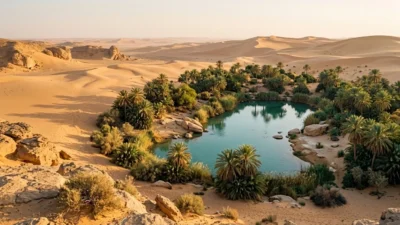
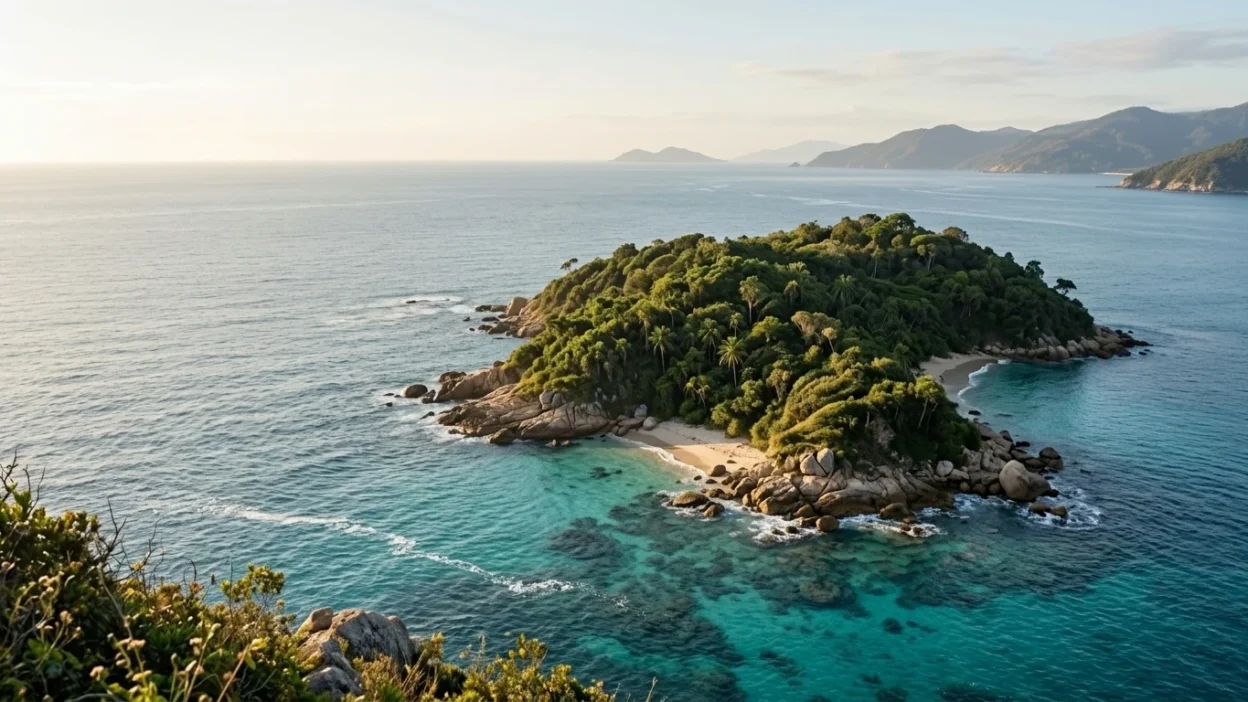
Island symbolism explores the deeper meanings associated with islands, from solitude and freedom to peace, independence, mystery, and self-discovery. Surrounded by water, an island exists between separation and connection, making it a powerful symbol in nature, literature, spirituality, and everyday life.
An island can represent a peaceful retreat from the demands of the world or a place of isolation where a person must confront their thoughts and emotions. Its meaning often depends on the surrounding landscape, the condition of the water, and the feelings an island inspires.
Whether you encounter an island in a dream, a story, a painting, or a real journey, its symbolism can offer insight into independence, emotional boundaries, and the search for belonging.
Island Symbolism Meaning (Clear Definition)
Island symbolism refers to the symbolic meanings associated with islands, including independence, solitude, refuge, freedom, isolation, renewal, and personal discovery.
Because islands are separated from the mainland by water, they naturally suggest a boundary between the familiar and the unknown. They can represent a private inner world, a safe place away from outside pressures, or a challenge that encourages personal growth.
An island may symbolize different things depending on its appearance and context. A lush, peaceful island might represent comfort and abundance, while a deserted island may suggest loneliness or the need to become self-reliant.
Common meanings of island symbolism include:
- Independence: Standing on your own and making personal choices.
- Solitude: Finding time for reflection and inner peace.
- Isolation: Feeling disconnected from people or society.
- Freedom: Escaping restrictions and exploring new possibilities.
- Safety: Discovering shelter during difficult circumstances.
- Self-discovery: Understanding your identity, desires, and values.
- Transformation: Entering a new stage of life through unfamiliar experiences.
At its heart, an island symbolizes the relationship between being separate and remaining connected to the wider world.
What Does Island Symbolism Represent?
Islands can represent several interconnected ideas. Their meanings often reflect the human desire for independence while also revealing the emotional challenges that separation can bring.
Independence and Self-Reliance
An island stands apart from the mainland, making it a natural symbol of independence. In symbolic terms, it can represent the ability to make decisions, trust your judgment, and build a life according to your own values.
This meaning becomes especially powerful when someone is entering a new chapter, such as moving away from home, starting a business, or learning to live independently.
An island can remind us that independence is not simply about being alone. It also involves developing the confidence and skills needed to navigate life without constant reassurance from others.
Solitude and Inner Peace
A quiet island surrounded by calm water often symbolizes rest, reflection, and emotional balance. It suggests a place where outside distractions become less important and inner thoughts can receive attention.
This symbolism may appeal to people who feel overwhelmed by busy schedules, social expectations, or constant demands.
Solitude can create space for creativity and self-understanding. However, healthy solitude differs from unwanted isolation. A peaceful island represents the freedom to withdraw temporarily, while a lonely island may suggest an absence of meaningful connection.
Freedom and Escape
Islands frequently appear in stories as destinations far removed from ordinary life. They can symbolize freedom from responsibilities, social rules, or limiting circumstances.
An island journey may represent the desire to begin again, explore unfamiliar opportunities, or leave behind a situation that no longer feels right.
Yet freedom also carries responsibility. A person who escapes to an island may discover that independence requires practical decisions, patience, and the courage to face uncertainty.
Safety and Refuge
Some islands provide shelter from storms, dangerous waters, or difficult journeys. Symbolically, these places represent protection, recovery, and emotional security.
A sheltered island may suggest that you are searching for stability or have finally found a place where you can rest. It can also represent a supportive relationship, a comfortable home, or a personal boundary that protects your well-being.
Mystery and the Unknown
An island beyond the horizon often inspires curiosity. What lies on its shores? Who lives there? What might be discovered beneath its trees or within its caves?
This sense of mystery makes islands symbols of hidden possibilities and unexplored parts of the self. An unfamiliar island may represent an opportunity that has not yet become clear or a personal truth you are only beginning to understand.
A Quick Guide to Island Symbolism
| Island imageCommon symbolic meaning | |
|---|---|
| Tropical island | Pleasure, freedom, renewal |
| Deserted island | Loneliness, independence, survival |
| Green, fertile island | Growth, abundance, hope |
| Rocky island | Strength, endurance, resilience |
| Small island in rough water | Vulnerability, uncertainty, perseverance |
| Remote island | Mystery, withdrawal, self-discovery |
| Island connected by a bridge | Reconciliation, access, belonging |
| Island surrounded by calm water | Peace, emotional balance, reflection |
These interpretations are possibilities rather than fixed rules. Personal experiences and cultural traditions can change what an island means to an individual.
Spiritual Meaning of Island Symbolism
Spiritually, an island can represent the inner self, a sacred retreat, or a place of personal awakening. Its separation from the mainland suggests stepping away from distractions to reconnect with deeper values and beliefs.
A Journey Toward Self-Discovery
An island may symbolize the inward journey a person takes when searching for meaning. Just as reaching a remote shore requires leaving familiar surroundings, personal growth often involves questioning old assumptions and exploring unfamiliar ideas.
The island becomes a metaphor for discovering who you are beneath social expectations.
A Sacred Space for Reflection
In spiritual interpretations, secluded natural places can serve as settings for prayer, meditation, contemplation, and renewal. An island may represent a protected space where a person can listen to their conscience, examine their choices, and regain a sense of direction.
This does not mean that spiritual growth requires physical isolation. The island can simply symbolize the quiet attention needed to understand yourself more clearly.
Balance Between Independence and Connection
Water separates an island from the mainland, but it also connects it to the surrounding world. Spiritually, this relationship can symbolize the balance between individuality and belonging.
You can maintain your personal identity while remaining connected to family, community, nature, or a larger sense of purpose.
The deeper lesson is that being independent does not require closing yourself off from others.
Renewal and New Beginnings
Reaching an island after a long journey can symbolize arriving at a new stage of life. It may represent recovery after hardship, a renewed sense of purpose, or the discovery of possibilities that were previously hidden.
A green island with fresh vegetation can strengthen this meaning, suggesting that growth remains possible even after periods of difficulty.
Biblical / Religious Meaning of Island Symbolism
Islands appear in biblical and religious contexts in different ways, but they do not have one universal symbolic meaning. Their interpretation depends on the passage, tradition, and historical setting.
Islands in the Bible
In the Bible, islands and distant coastlands sometimes represent faraway nations and peoples. They can appear in passages concerning God’s sovereignty, judgment, promises, and the spread of divine praise.
For example, Isaiah 42:10 calls on the inhabitants of distant coastlands to praise the Lord. In this context, distant lands help communicate the broad reach of divine authority and worship.
Revelation 1:9 also mentions the island of Patmos, where John says he was present because of the word of God and the testimony of Jesus. Patmos is a real location associated with John’s vision and the writing of Revelation.
The island setting may invite reflection on endurance, faith, and spiritual revelation, although the text does not establish islands as a universal biblical symbol of isolation or transformation.
Religious Reflection and Withdrawal
Across various religious traditions, remote natural places have sometimes served as settings for prayer, retreat, or contemplation. An island can therefore be interpreted as an image of stepping away from everyday distractions to seek spiritual clarity.
However, this is a broader symbolic interpretation rather than a belief shared by every religion.
Islands as Images of Distant Peoples
In biblical language, references to distant islands or coastlands can also emphasize that a message extends beyond one familiar place or community. The imagery highlights distance while reminding readers that geographical separation does not necessarily mean spiritual exclusion.
Island Symbolism in History and Culture
Throughout history, islands have played important roles in migration, trade, exploration, defense, settlement, and cultural development. These practical experiences have helped shape their symbolic meanings.
Islands as Places of Discovery
For sailors and explorers, islands could signal land after long periods at sea. They offered opportunities to find food, obtain fresh water, establish settlements, and learn about unfamiliar environments.
As a result, islands often became symbols of discovery, hope, and new beginnings. Finding land after a difficult voyage could mean survival and the possibility of rebuilding a life.
Islands as Protected Communities
Many islands developed distinct languages, traditions, and customs because of their geographical separation. In some places, this isolation helped preserve cultural identity and local knowledge.
Symbolically, islands can therefore represent belonging, heritage, and the strength of a close-knit community.
However, island life has never been entirely separate from the wider world. Trade, migration, colonization, and cultural exchange have connected island communities to distant societies for centuries.
Islands as Places of Exile
Islands have also served as sites of imprisonment, forced exile, and political isolation. In these contexts, their surrounding waters can represent barriers that prevent people from returning home.
This history contributes to the darker side of island symbolism. A place that appears peaceful to one person may represent confinement or separation to another.
Islands and Cultural Identity
Island environments have shaped local relationships with the sea, weather, fishing, agriculture, and travel. For many island communities, the ocean is not merely a barrier; it is also a source of livelihood, cultural knowledge, and connection.
This perspective adds depth to island symbolism by showing that an island can represent both a distinct identity and a place linked to a much larger world.
Island Symbolism in Literature and Art
Islands are powerful settings in literature and visual art because they place characters in landscapes that feel separate from familiar society. Their boundaries create opportunities for adventure, conflict, reflection, and change.
Islands as Places of Adventure
In adventure stories, an island may contain hidden treasure, unfamiliar creatures, ancient ruins, or unexpected dangers. It becomes a setting where characters must rely on their abilities and make difficult choices.
Robert Louis Stevenson’s Treasure Island, for example, uses an island as the destination of a dangerous treasure hunt. The setting evokes adventure, greed, courage, and uncertainty.
The island represents a world beyond ordinary experience, where the characters’ values and decisions are tested.
Islands as Symbols of Survival
In Daniel Defoe’s Robinson Crusoe, an isolated island becomes the setting for survival, resourcefulness, and adaptation. The protagonist must create shelter, find food, and develop new ways to live.
The island functions as both a physical challenge and a setting for examining independence, labor, fear, and human resilience.
Islands as Places of Isolation and Conflict
In William Golding’s Lord of the Flies, an island initially appears to offer freedom from adult authority. However, the children’s attempt to organize their own society reveals tensions involving power, fear, and human behavior.
Here, the island becomes a setting in which social rules are questioned and the darker aspects of human nature emerge.
Islands in Visual Art
Artists often use islands to explore solitude, beauty, vulnerability, and the relationship between people and nature.
A small island beneath a vast sky can emphasize human fragility. A lush island surrounded by clear water may suggest peace and abundance, while a rocky island beneath storm clouds can communicate endurance and uncertainty.
The surrounding water is important because it shapes how the island is perceived. Calm water can suggest harmony, whereas rough waves may create a sense of danger or emotional conflict.
Dream Meaning of Island Symbolism
Dreaming about an island can reflect a desire for independence, emotional space, rest, or a fresh start. It may also express feelings of loneliness or uncertainty about your connection to other people.
The most useful interpretation depends on what happens in the dream and how you feel during it.
Dreaming of a Beautiful Island
A beautiful, green island with calm water may reflect a desire for peace, enjoyment, or emotional renewal.
It could suggest that you need time away from everyday pressure or that you are moving toward a more balanced period in life.
Dreaming of Being Stranded on an Island
Being stranded may symbolize feeling unsupported, misunderstood, or trapped in a difficult situation.
Alternatively, the dream could reflect concerns about handling responsibilities alone. Consider whether you have been avoiding asking for help or feeling disconnected from people you trust.
Dreaming of Discovering a New Island
Discovering an unfamiliar island may represent curiosity, personal growth, or a new opportunity.
The dream might reflect an emerging interest, a change in perspective, or a part of your personality you have not fully explored.
Dreaming of Leaving an Island
Leaving an island may symbolize reconnecting with others, accepting change, or moving beyond a period of withdrawal.
If leaving feels exciting, it may suggest readiness for a new chapter. If it feels frightening, it could reflect uncertainty about returning to responsibilities or familiar relationships.
Dreaming of an Island During a Storm
An island surrounded by rough water may reflect pressure, emotional conflict, or a sense of vulnerability.
If the island remains stable despite the storm, it could symbolize resilience and the ability to maintain your values during difficult circumstances.
Dreams do not have scientifically established universal meanings. Treat these interpretations as prompts for reflection rather than predictions or definite explanations of your future.
Modern Meaning of Island Symbolism
In modern life, island symbolism often relates to personal boundaries, digital escape, emotional well-being, independence, and the search for balance.
The Island as a Personal Retreat
Modern life can involve constant communication, work demands, and pressure to remain available. An island can symbolize the wish to step back from these demands and create room for rest.
This may take the form of a holiday, a quiet afternoon, time in nature, or a period without digital distractions.
The important idea is not escaping life permanently but creating enough space to return with greater clarity.
Independence and Personal Boundaries
An island can represent the boundaries people establish to protect their time, energy, and values.
Healthy boundaries allow individuals to make their own decisions while maintaining meaningful relationships. However, if boundaries become walls that prevent all connection, island symbolism can shift toward loneliness and emotional distance.
The challenge is learning when to stand alone and when to invite others closer.
Environmental Awareness
Islands are often vulnerable to rising sea levels, coastal erosion, storms, and changes in marine ecosystems. These realities give island symbolism a modern environmental dimension.
An island may represent the delicate relationship between people and nature, reminding us that beautiful landscapes and unique communities need protection.
It can also symbolize resilience, especially when communities adapt to environmental challenges while preserving their cultural identity.
Digital Isolation and Connection
Despite living in a highly connected world, people can experience loneliness or feel separated from their communities. An island offers a useful metaphor for this experience.
Someone may appear connected through technology while feeling emotionally distant from others. In this context, island symbolism encourages reflection on the difference between communication and genuine belonging.
Island Symbolism in Love and Relationships
In relationships, an island can represent independence, emotional safety, personal space, or the distance that develops when people stop communicating openly.
A peaceful island shared by two people may symbolize a private world built on trust, affection, and mutual understanding. It can represent a relationship that offers shelter from outside pressures without cutting either person off from the wider community.
A deserted island, by contrast, may suggest loneliness within a relationship or the feeling that one person must carry every responsibility alone.
The symbolism also highlights an important truth: healthy relationships need both connection and individuality. Partners can support one another without losing their personal identities.
If an island appears in a dream about love, consider whether you feel supported, independent, isolated, or in need of more meaningful communication.
The Shadow Side of Island Symbolism
Although islands often suggest peace and freedom, their symbolism can also reveal difficult emotions and limitations.
Loneliness: Separation can become painful when solitude is unwanted or continues for too long.
Emotional avoidance: Retreating from conflict may provide temporary relief but can prevent important conversations from happening.
Excessive independence: Refusing help may create unnecessary pressure and make ordinary challenges harder to manage.
Fear of change: An island may represent a familiar place that feels safe but limits opportunities for growth.
Confinement: Surrounding water can become a barrier when leaving feels impossible or when circumstances restrict personal freedom.
Recognizing these meanings does not make the island a negative symbol. Instead, it shows that independence and safety are most valuable when they leave room for growth, movement, and connection.
What Island Symbolism Can Teach Us
Island symbolism offers several useful lessons for everyday life.
First, solitude can be valuable. Taking time to reflect helps you understand your emotions and decide what matters most. Being alone for a while does not mean you must remain disconnected.
Second, independence grows through experience. Like someone learning to survive on an unfamiliar shore, you can develop confidence by meeting challenges, making decisions, and learning from mistakes.
Third, personal boundaries should protect your well-being without preventing meaningful relationships. It is possible to maintain your identity while allowing others to support you.
Finally, every island exists within a wider environment. Its connection to the surrounding water reminds us that individual lives are shaped by families, communities, cultures, and nature.
The island’s deeper message is about finding a healthy balance between having a place of your own and remaining open to the world beyond it.
Frequently Asked Questions About Island Symbolism
What does an island symbolize spiritually?
An island can symbolize inner peace, self-discovery, independence, and a place for spiritual reflection. Its meaning often depends on whether it feels peaceful, welcoming, lonely, or restrictive.
What does a deserted island symbolize?
A deserted island often represents isolation, self-reliance, survival, or the need for personal space. It may also reflect a fear of being unsupported or disconnected from others.
What does an island symbolize in dreams?
An island in a dream may reflect a desire for freedom, rest, emotional security, or independence. Being stranded may suggest loneliness, while discovering a new island may represent curiosity or a fresh opportunity.
What does a tropical island symbolize?
A tropical island commonly symbolizes relaxation, abundance, freedom, pleasure, and renewal. It may represent a longing for a break from responsibilities or a more peaceful way of living.
Is island symbolism positive or negative?
Island symbolism can be positive or negative depending on its context. It may represent safety, independence, and discovery, but it can also suggest loneliness, confinement, or emotional distance.
Conclusion
Island symbolism captures the delicate balance between independence and connection. An island can offer refuge, inspire discovery, and encourage self-understanding, yet it can also reveal the loneliness that comes with separation. Its lasting message is that personal growth requires both a place to stand on your own and the willingness to remain connected to the wider world.

Miles Maverick is a content writer and symbolism enthusiast at BibloSign.com, specializing in symbol meanings, cultural interpretations, and historical symbolism, helping readers discover deeper insights behind signs, icons, and symbolic traditions.