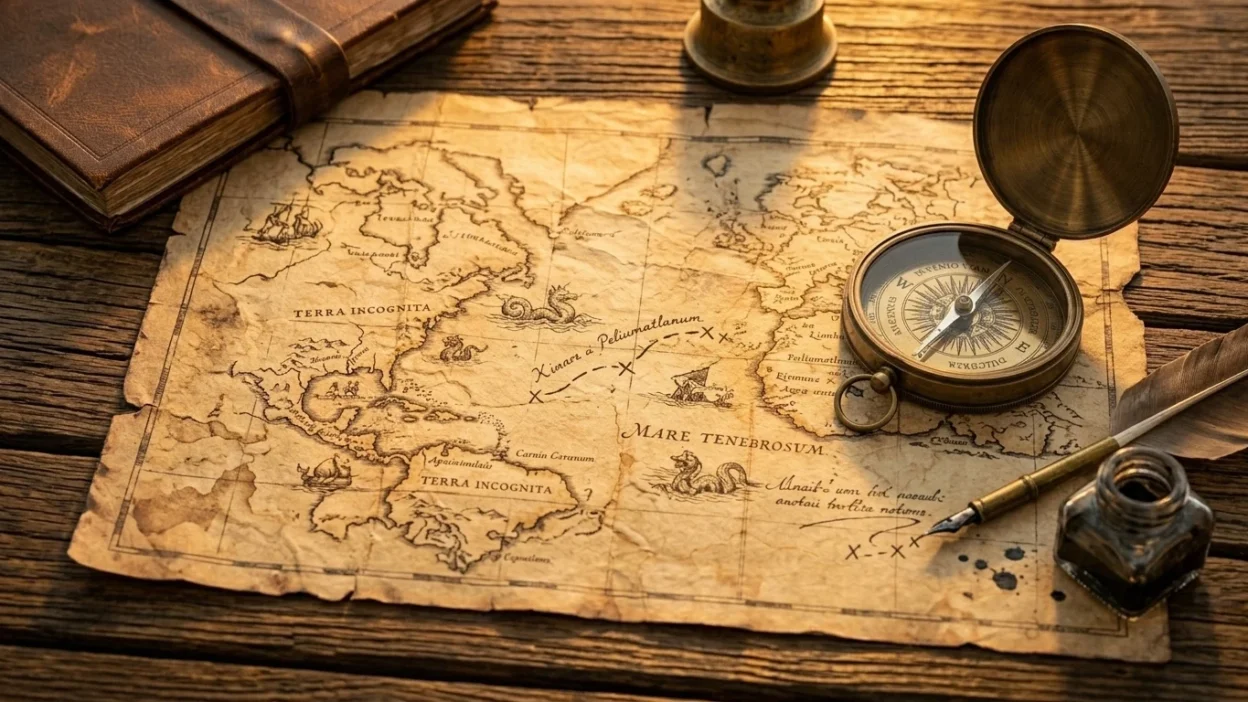
There’s something exciting about unfolding a map and imagining where each path might lead. Whether marking familiar roads or unexplored territory, a map represents far more than lines and landmarks. That sense of possibility is exactly why map symbolism has held such powerful meaning across cultures and centuries, representing exploration, planning, and life’s ongoing journey. Because it captures both the known and unknown, the map remains one of the most meaningful symbols of purpose and personal discovery.
If you’ve ever wondered why maps carry such deep meaning beyond their practical use, this guide will walk you through everything this timeless guide truly represents.
Map Meaning (Clear Definition)
At its core, the map symbolizes exploration, planning, and life’s journey. Because it visually represents both familiar paths and unknown territory, the map reflects the balance between preparation and the willingness to discover something new.
Here’s a quick overview of its core symbolic meaning:
| Symbolic Element | Meaning |
|---|---|
| Charted Paths | Planning, direction |
| Unmarked Territory | Mystery, potential |
| Starting Point | Origin, identity |
| Destination Marker | Goals, purpose |
| Detailed Routes | Preparation, wisdom |
Because the map represents both structure and open possibility, its symbolism often reflects the idea that meaningful journeys require both thoughtful planning and openness to the unknown.
What Does the Map Represent?
Overall, map symbolism touches on several meaningful and purposeful themes:
- Exploration – reflecting curiosity and the pursuit of new experiences
- Planning – representing preparation and intentional direction
- Life’s journey – symbolizing personal growth and evolving paths
- Perspective – linked to seeing the bigger picture of one’s circumstances
- Purpose – reflecting clear goals and meaningful destinations
- Discovery – representing the excitement of uncovering something new
Together, these themes highlight why the map continues to be seen as one of the most symbolically meaningful representations of purposeful exploration and personal growth.
Spiritual Meaning of the Map
Spiritually, the map represents inner guidance, purposeful direction, and trust in life’s unfolding journey. Because it captures both known paths and unexplored territory, the map is often associated with balancing preparation with openness to spiritual growth.
More specifically, the spiritual meaning of the map often includes:
- Trusting the journey, even when parts of the path remain unclear
- Recognizing personal growth as an evolving, ongoing process
- Balancing structured planning with openness to spiritual discovery
- Finding clarity and perspective during life’s transitions
Many spiritual traditions view the map as a symbol of intentional growth, believing it represents the balance between thoughtful direction and trust in life’s unfolding path.
Biblical and Religious Meaning of the Map
While the map isn’t directly referenced in scripture, its symbolism closely aligns with broader religious themes of guidance, purpose, and divine direction.
In biblical and religious interpretations, the map is often associated with:
- Divine guidance, symbolizing direction provided through faith
- Purposeful living, reflecting a life aligned with spiritual calling
- Trust in the unknown, representing faith even when the path isn’t fully visible
- Wisdom, linked to discernment and thoughtful decision-making
Because the map so consistently represents guidance and purposeful direction, it remains a meaningful symbol within broader spiritual and religious reflection.
Map Symbolism in History and Culture
Throughout history, maps have carried diverse and powerful cultural meaning.
- Ancient civilizations – Early maps symbolized humanity’s desire to understand and organize the surrounding world.
- Age of Exploration – Maps represented ambition, discovery, and the pursuit of new opportunities across uncharted territory.
- Cartography as an art form – Maps became symbols of knowledge, precision, and human achievement.
- Modern symbolic use – Maps continue to represent personal growth, planning, and life’s evolving journey.
Across these cultures, maps consistently represent exploration, purpose, and a meaningful connection between preparation and discovery.
Map Symbolism in Literature and Art
In literature, maps often symbolize a character’s journey, personal growth, or the pursuit of a meaningful goal. Writers frequently use map imagery to represent both the literal and emotional path a character takes toward self-discovery.
Similarly, in visual art, maps hold significant symbolic weight:
- Representing exploration and ambition in historical and adventure artwork
- Symbolizing purpose and direction in symbolic compositions
- Creating visual storytelling through charted paths and landmarks
- Reflecting themes of growth and discovery in modern design
Because of their reflective and purposeful nature, maps continue to be a favorite artistic tool for exploring growth, direction, and life’s meaningful journey.
Dream Meaning of the Map
When a map appears in dreams, it often carries guiding and reflective symbolism. Common interpretations include:
- Reading a map – seeking clarity or planning an important decision
- A torn or incomplete map – uncertainty or missing information about life’s direction
- Following a map successfully – confidence in your current path
- Losing a map – fear of losing direction or purpose
- Creating your own map – taking control of your personal journey
Therefore, these dreams often reflect your emotional relationship with purpose, planning, and personal direction.
Modern Meaning of the Map
Today, map symbolism continues to represent exploration, purpose, and intentional growth. In contemporary culture, the map serves as a reminder to:
- Approach life’s journey with both preparation and curiosity
- Trust personal growth as an evolving, ongoing process
- Stay open to discovering new paths and possibilities
- Recognize the value of perspective when navigating challenges
Because of its timeless and purposeful symbolism, the map remains widely referenced in personal development, storytelling, and cultural expression, reinforcing its modern identity as a symbol of exploration and meaningful direction.
Frequently Asked Questions
What does a map symbolize?
A map symbolizes exploration, planning, and life’s journey, representing the balance between preparation and openness to discovery.
What is the spiritual meaning of a map?
Spiritually, a map represents inner guidance and trust in life’s unfolding journey, often symbolizing purposeful direction and spiritual growth.
What does it mean to dream about a map?
Dreaming about a map often reflects a need for clarity, planning, or confidence in navigating an important life decision.
Why is the map associated with personal growth?
Because it represents both known paths and unexplored territory, the map has come to symbolize the evolving nature of personal journeys.
Does a map always symbolize something positive?
Generally yes—while a torn map in dreams may reflect uncertainty, the map itself primarily symbolizes purpose, guidance, and meaningful exploration.
Conclusion
Ultimately, map symbolism beautifully reflects the value of intentional exploration. Representing planning, purpose, and personal growth, this timeless guide reminds us that meaningful journeys require both thoughtful direction and the courage to discover what lies ahead.

Miles Maverick is a content writer and symbolism enthusiast at BibloSign.com, specializing in symbol meanings, cultural interpretations, and historical symbolism, helping readers discover deeper insights behind signs, icons, and symbolic traditions.